 blog
Traditional South African Snacks: A Practical Menu Guide
Quick Summary
South African snacks are built from savoury meats, finger foods and sweet treats. Biltong, droëwors and boerewors bites anchor the savoury side, while koeksisters, milk tart and rusks finish the table. Plan about six to eight pieces per guest for a standing gathering, and prepare most items ahead of time.
- Choose one or two savoury meats, one or two finger foods, and one or two sweet treats.
- For a standing gathering, plan six to eight pieces per guest across savoury and sweet.
- Make a little extra of the most popular item, since biltong and koeksisters go first.
- Rusks can be baked a week ahead and stored in an airtight jar.
- Keep koeksisters on a separate plate so the syrup does not soak into savoury items.
Table of Contents
- How to Build a Traditional South African Snacks Menu
- Savoury Snacks: Biltong, Droëwors and Boerewors Bites
- South African Finger Foods for Sharing
- Braai and Street Snacks Worth Serving
- South African Sweet Treats to Finish the Table
- Putting Together a South African Snack Platter
- Planning Your Next Snack Spread With African Vibe
- Frequently Asked Questions
Traditional South African Snacks: A Practical Menu Guide
Last Updated: November 21, 2026
How to Build a Traditional South African Snacks Menu
Building a traditional South African snacks menu starts with one question: what will your guests reach for first? A good snack spread balances savoury and sweet, cold and warm, and bites that can be eaten standing up with a drink in hand.
Start with three groups. Choose one or two savoury meats, one or two finger foods, and one or two sweet treats. That gives you variety without overwhelming your table or your budget.
- Savoury meats: biltong, droëwors, boerewors bites
- Finger foods: samosas, sosaties, cheese and chutney bites
- Sweet treats: koeksisters, milk tart, rusks
Think about the occasion too. A braai calls for grilled and smoky bites. A casual get-together with friends suits a platter you can assemble ahead of time. A family gathering often needs a mix of sweet and savoury so every age group finds something they like.
Plan quantities before you shop, and allow fewer snack pieces per guest if a full meal follows. A useful tip is to make a little extra of the most popular item, since biltong and koeksisters tend to disappear first.
Savoury Snacks: Biltong, Droëwors and Boerewors Bites
Biltong and droëwors are the backbone of most South African snack tables. Both are dried meats, and both keep well for a long time. They are easy to serve because they need no cooking at the table.
Boerewors is a spiced sausage that works well in bite-sized portions. Slice it thin, grill it briefly, and serve it with a dab of chutney. For tips on keeping boerewors moist after it has been cooked and cooled, see our reheating guide. It is a braai favourite that travels well from the grill to the platter.
Biltong versus droëwors: what sets them apart
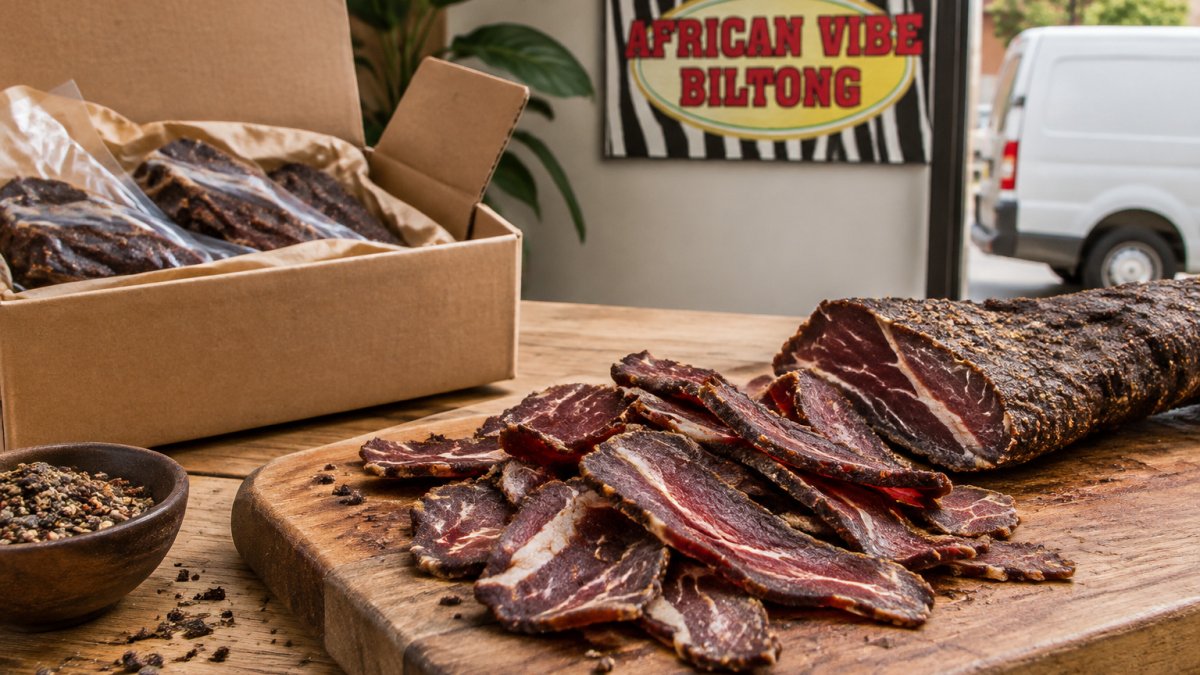
Biltong is air-dried meat, usually cut into strips and seasoned with a traditional spice blend. Once you have bought it, you can read up on how to keep biltong fresh at home. It has a firm, chewy texture and a rich, savoury flavour. Droëwors is a dried sausage, thinner and more delicate than a stick of biltong, with a light coriander note.
When you are choosing between them, think about your guests. Biltong is a crowd favourite with a bold taste. Droëwors suits people who prefer something lighter and easy to snack on in small pieces.
South African Finger Foods for Sharing
Finger foods are the easiest way to add variety to a snack menu. They are bite-sized, easy to hold, and simple to share. Samosas, sosaties, and small savoury pastries all fit this category.
Sosaties are skewered meat marinated in a sweet and spicy sauce, then grilled. Serve them warm with a small bowl of apricot dipping sauce on the side. They are best made fresh but can be reheated gently.
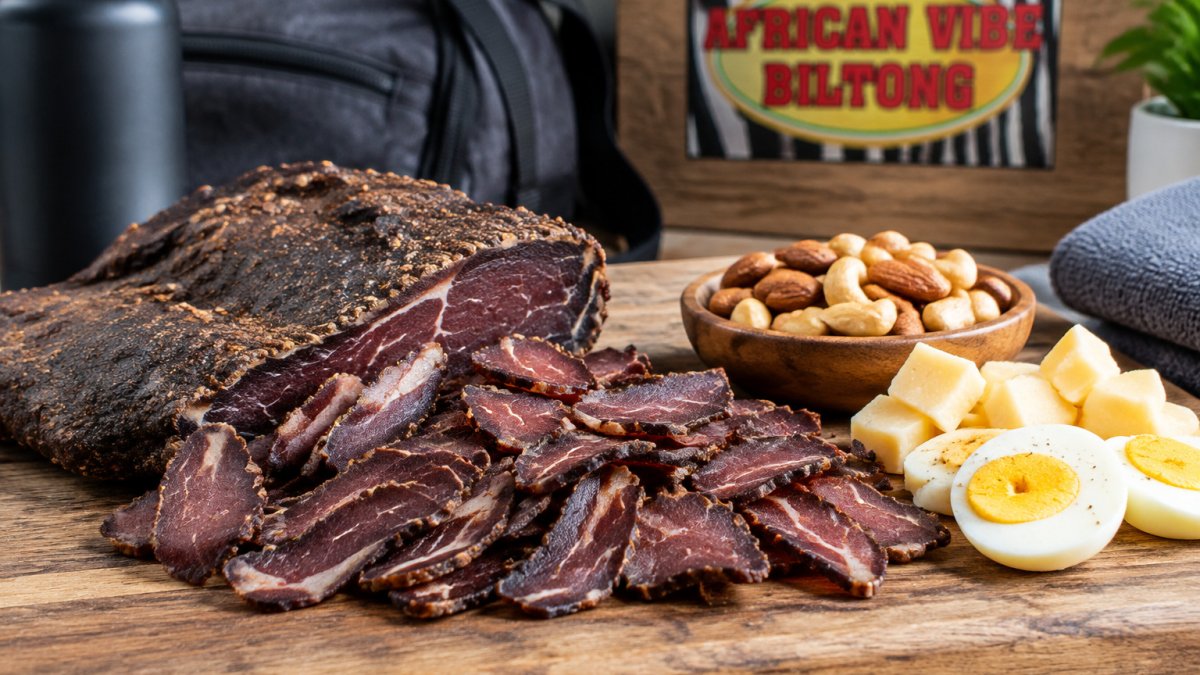
Cheese and chutney bites are a simple option that appeals to almost everyone. Use a firm cheese cut into cubes, add a dab of fruit chutney, and secure with a cocktail stick. Keep them chilled until serving.
Plan one hot finger food and one cold one. This keeps the table interesting and helps guests move between dishes without filling up too quickly.
Braai and Street Snacks Worth Serving
A braai is the perfect setting for snacks that come straight off the grill, but the best braai snack menu depends on how you are serving. For a standing gathering where guests mill around the fire, choose bites that can be eaten with one hand and do not need cutlery. For a seated braai, you can offer slightly larger portions and a mix of hot and cold items.
For a standing braai, build your menu around these snack-sized options:
- Boerewors bites: slice a coiled sausage into short lengths, grill until browned, and serve with a small bowl of onion and tomato relish. Allow three to four bites per guest.
- Sosaties: thread cubes of marinated meat onto skewers and grill over medium coals. A sweet and spicy apricot marinade is traditional. Make them the day before and refrigerate; they take about 10 minutes to cook.
- Grilled mielie cobs: cut cobs into thirds, brush with butter and a little chilli, and grill until charred in spots. These are filling, so count one third-cob per guest if other snacks are on offer.
- Spiced chicken wings: a tangy glaze of chutney, vinegar, and spice works well. Grill ahead and keep warm in a low oven.
Street snacks like bunny chow are a different proposition. A bunny chow is a quarter or half loaf of bread hollowed out and filled with curry. It is messy and filling, so it works better as a casual meal than a standing snack. If you want to include it on a snack table, serve quarter-loaf portions and provide plenty of napkins. Watch out: bunny chow does not hold well for long, so serve it within 30 minutes of filling the bread.
For planning, a common pattern is to offer two hot braai snacks and one cold item, such as a cheese and chutney bite, so guests have variety without everything coming off the grill at once. Keep a bowl of wet wipes nearby for sticky fingers. Braai snacks often disappear fastest in the first 20 minutes, so it helps to have a second batch ready to grill.
South African Sweet Treats to Finish the Table
Sweet treats close a snack spread on a high note. Koeksisters are sticky, syrup-soaked plaited dough and are almost always a hit. Malva pudding is a warm, sponge-style dessert, often served with custard or cream.
Milk tart has a smooth custard filling in a crisp pastry base and sits well on a platter with a dusting of cinnamon. Rusks are dry, crunchy biscuits that pair well with tea or coffee.
When you serve koeksisters, keep them on a separate plate. The syrup can soak into savoury items if they sit too close together.
Consider the timing. Serve warm malva pudding first, then move to cooler sweets like milk tart and rusks as the evening goes on.
Putting Together a South African Snack Platter
A snack platter brings everything together on one board, but the difference between a good platter and a great one is planning. This section gives you a practical framework for quantities, preparation timing, and make-ahead steps so you can assemble with confidence.
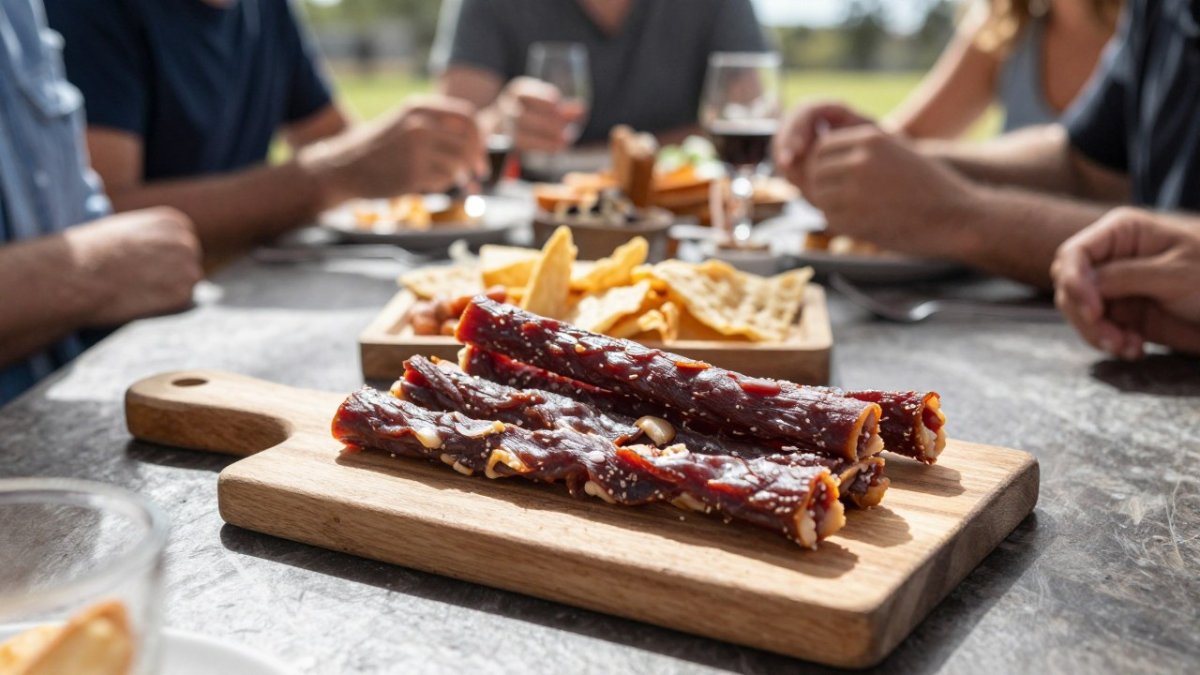
Quantities per guest. For a standing gathering where snacks replace a meal, plan for six to eight pieces per person across savoury and sweet. If a full meal follows, reduce that to three to four pieces. As a guide, allow 30-40 g of biltong or droëwors per person, two to three small finger foods, and one to two sweet items. A common pattern is to make one extra portion of the most popular item, biltong and koeksisters tend to go first. Since biltong and droëwors are easy to portion ahead, making your own droëwors can help you tailor the savoury spread to the gathering.
Preparation time. Most of the platter can be assembled ahead. Biltong and droëwors need no preparation. Cheese and chutney bites take about 10 minutes to assemble and should be kept chilled. Sosaties benefit from marinating overnight and take 10-15 minutes to grill. Koeksisters can be made a day ahead and stored in a sealed container; the syrup will soften them slightly, which many people prefer. Milk tart is best made the morning of serving. Rusks can be baked a week ahead and stored in an airtight jar.
Make-ahead timeline. Two days before: bake rusks, make koeksister dough. One day before: fry and syrup koeksisters, marinate sosaties, make chutney. Morning of: assemble cheese bites, bake milk tart. One hour before: arrange the platter, keeping warm items aside. Just before serving: add warm items and grill sosaties.
Dietary alternatives. Not every guest eats meat, and a thoughtful platter includes options. For vegetarian guests, replace biltong with roasted nuts or seed crackers, and offer samosas filled with potato and pea instead of meat. For gluten-free guests, note that koeksisters and rusks contain wheat; provide a small bowl of biltong and cheese bites separately to avoid cross-contact. A fruit chutney is usually gluten-free, but check the label. Watch out: some store-bought chutneys contain wheat-based thickeners, so read the ingredients if you are catering for a gluten-free guest.
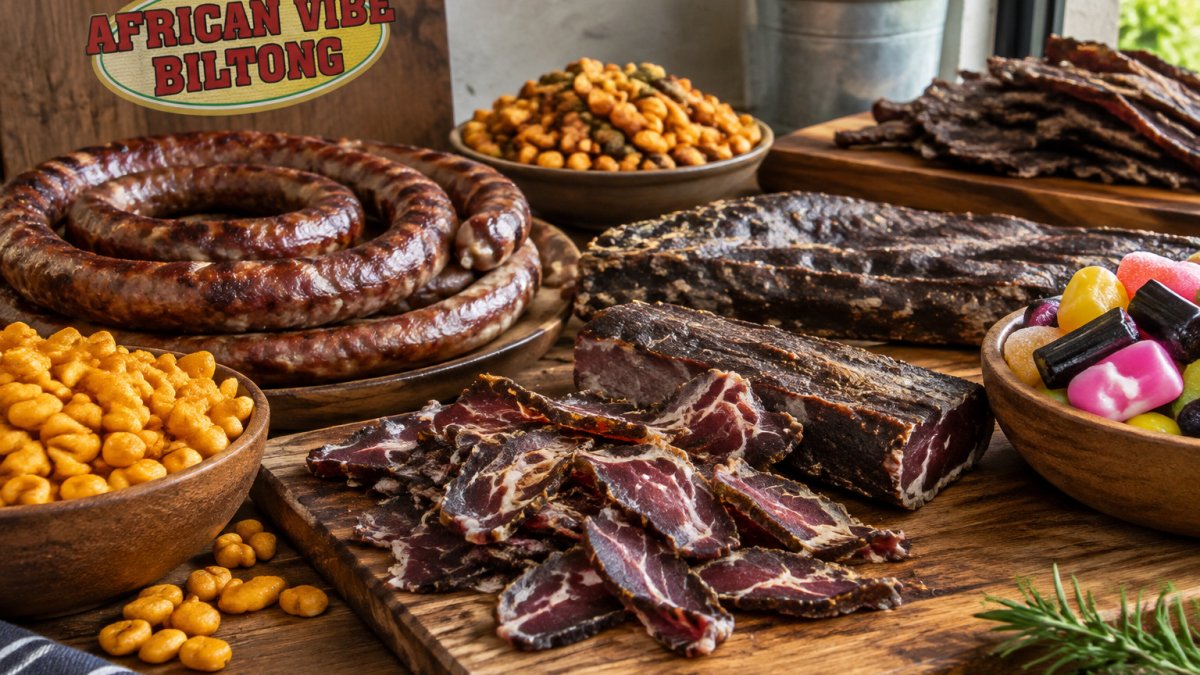
Assembly order. Start with a large wooden board or platter. Place the biltong and droëwors first, since they are the centrepiece. Add the finger foods around them, then fill the gaps with sweet treats. Include a small bowl of South African preserves, such as chutneys and jams, to serve alongside. Arrange items in small groups rather than scattering them. This makes it easy for guests to see what is on offer and reach for what they want. Keep koeksisters on a separate plate so the syrup does not soak into savoury items.
Our suggestion is to prepare the platter about an hour before guests arrive. Cover it lightly and keep it in a cool place. Add the warm items just before serving so they stay fresh.
Planning Your Next Snack Spread With African Vibe
A good snack spread takes planning, but the result is worth it. Choose a mix of savoury and sweet, decide on portion sizes, and build your platter around a few strong centrepieces.
At African Vibe, we stock a range of authentic South African products, including biltong, boerewors, snapsticks and koeksisters. Our pantry range also includes South African preserves, so you can finish your platter in one place.
Keep in mind that fresh meat is bought in store. Customers can ring ahead to order in advance, or pop in and buy on the day.
Visit African Vibe to browse our range of traditional South African snacks and pantry items, and plan your next gathering with a table that tastes like home.
Frequently Asked Questions
What are traditional South African snacks?
Traditional South African snacks range from savoury dried meats such as biltong and droëwors to finger foods like samosas and sweet bakes such as koeksisters and milk tart. Many of them reflect the country's mix of Dutch, British, Indian, Malay and indigenous influences. At African Vibe, we stock a selection of these favourites, including Biltong, Boerewors and traditional confectionery, so you can build a authentic spread at home in Sydney without hunting across several shops.
What is the difference between biltong and droëwors?
Biltong is air-dried beef, usually cut into strips and seasoned with coriander, vinegar and salt, so it has a firm, chewy texture. Droëwors is a dried, thin sausage made from beef and spices, and it is generally more coarsely textured than biltong. Both are shelf-stable and make excellent snacks for sharing. Biltong is often the first choice for a snack platter, while droëwors suits readers who want a sausage-style bite.
What South African snacks are good for a party?
For a party, choose a mix of savoury finger foods, dried meats and sweet bites that can sit out comfortably. Biltong, droëwors, samosas and bite-sized bobotie cups work well alongside koeksisters and milk tart squares. Plan roughly a handful of savoury and a few sweet pieces per guest, and prepare anything that needs warming or frying shortly before serving. Offering one or two vegetarian options will also make the spread more inclusive.
How do you put together a South African snack platter?
Start with a large board or platter and place the heaviest items, such as biltong and droëwors, first. Add finger foods like samosas and cheese or biscuit pairings, then fill gaps with sweet treats such as koeksisters or rusks. Group similar items together so guests can find them easily, and keep a few small bowls for chakalaka or chutney. Refresh the platter during the event so it always looks generous.