 ultimate-guide
Why Is Wagyu Beef Expensive? The Real Costs Explained
Table of Contents
- Why Is Wagyu Beef Expensive? The Real Reasons Behind the Price
- Wagyu Beef Price Per Kg: What Drives the Number
- Wagyu Grading Explained: How Marbling Scores Affect Price
- The Genetics and Breeding Behind Expensive Wagyu
- Specialized Feeding, Longer Raising Periods, and Labor-Intensive Care
- Wagyu vs Grass-Fed Beef: What the Price Difference Buys You
- Is Wagyu Beef Worth It? What You're Actually Paying For
- Conclusion: Making Sense of the Wagyu Premium
- Frequently Asked Questions
Last Updated: October 12, 2026
Why Is Wagyu Beef Expensive? The Real Reasons Behind the Price
Wagyu beef is expensive because it costs far more to produce than ordinary beef: the cattle are genetically predisposed to lay down fine intramuscular fat, they are raised longer on carefully managed diets, and only a small number of herds exist worldwide. At African Vibe, we work with 100% naturally grass-fed Black Angus wagyu beef, so we see the cost structure behind every cut.
A single animal can take years to reach slaughter weight, and the care is hands-on rather than industrial. The result is a fat distribution you cannot replicate in a standard commercial herd.
Below, we break down where the money goes, from genetics to grazing to grading.
Wagyu Beef Price Per Kg: What Drives the Number
Wagyu beef price per kg is driven by five compounding factors: breed genetics, feed and grazing costs, the length of the raising period, labour intensity, and scarcity of supply.
Because African Vibe has not published fixed pricing, pricing depends on the cut, quantity, and delivery.
The Farm-to-Plate Cost Breakdown
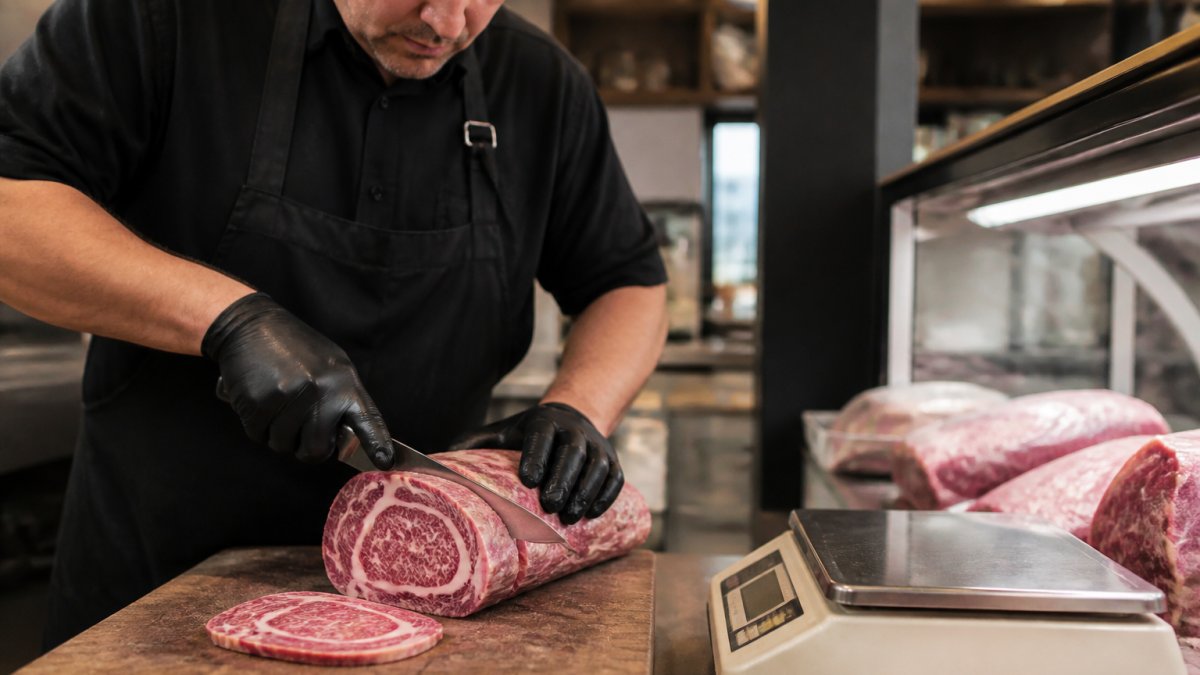
Think of the price as a stack of costs rather than a single markup. Breeding stock, pasture or feed, veterinary care, the extra months of raising, processing, and transport all sit underneath the final figure.
How the stack builds, from paddock to plate:
- Breeding stock and genetics. Fullblood Wagyu semen and embryos carry a significant premium over commercial beef genetics, recovered across the offspring rather than a single animal. Verified bloodlines cost more again because documentation and testing add paperwork.
- Feed and pasture. Wagyu are fed far longer than commodity cattle, so each animal consumes more feed over its life. Grain-finished programs buy in ration; grass-fed programs carry land, rotational grazing, and supplementary hay through dry periods.
- Length of the raising period. Every extra month adds feed, space, and attention. This time cost is the biggest reason Wagyu sits above commodity beef.
- Labour and handling. Low-stress yards, quiet handlers, and slow routines are labour-intensive by design. Calm animals marble more evenly, so producers treat the higher labour bill as a quality input, not an overhead to cut.
A useful way to read any price is to ask which stages the seller controls. A producer selling direct from the farm removes two or three margins; a restaurant adds them back.
Japanese, American, and Australian Wagyu: Price Differences
Japanese Wagyu is typically the most expensive, partly because of strict domestic grading and the prestige of fullblood bloodlines. American Wagyu usually crosses Wagyu genetics with Angus to balance marbling against cost. Australian Wagyu sits between the two, and grass-fed programs appeal to buyers who want marbling without grain finishing.
The difference in your hand is real, but so is the difference in what the producer spent to get it there. Three distinctions matter most when comparing prices:
- Genetics and purity. Fullblood animals carry the full genetic tendency to marble. Crossbred animals, common in American and some Australian programs, carry a share of that tendency, and the price tracks the share.
- Feeding system. Grain finishing tends to produce more consistent, heavier marbling; grass-fed finishing produces a firmer, leaner profile. The price difference reflects the feed cost and time each system requires.
- Grading system. Japan uses its own yield and quality grading, the United States uses USDA grades, and Australia uses AUS-MEAT and Meat Standards Australia language. The same animal can be described differently under each system, so a marbling score is only meaningful when you know the scale.
How to Verify Authenticity and Read a Grade
Price only means something if the label is honest. Practical checks most buyers never make:
- Look for origin documentation or a breed percentage on the pack, not just the word "Wagyu".
- Ask for the marbling score and its grading system, a score without a scale is meaningless.
- Check whether the cut is primary (striploin, ribeye, tenderloin) or secondary. A high marbling score on a secondary cut often delivers better value than a low score on a prime cut.
- Be cautious of any product claiming Wagyu without a breed percentage, feeding system, or grading authority.
Wagyu Grading Explained: How Marbling Scores Affect Price
Wagyu grading explained in one line: a trained assessor scores the marbling, colour, and fat quality, and the higher the marbling score, the higher the price.
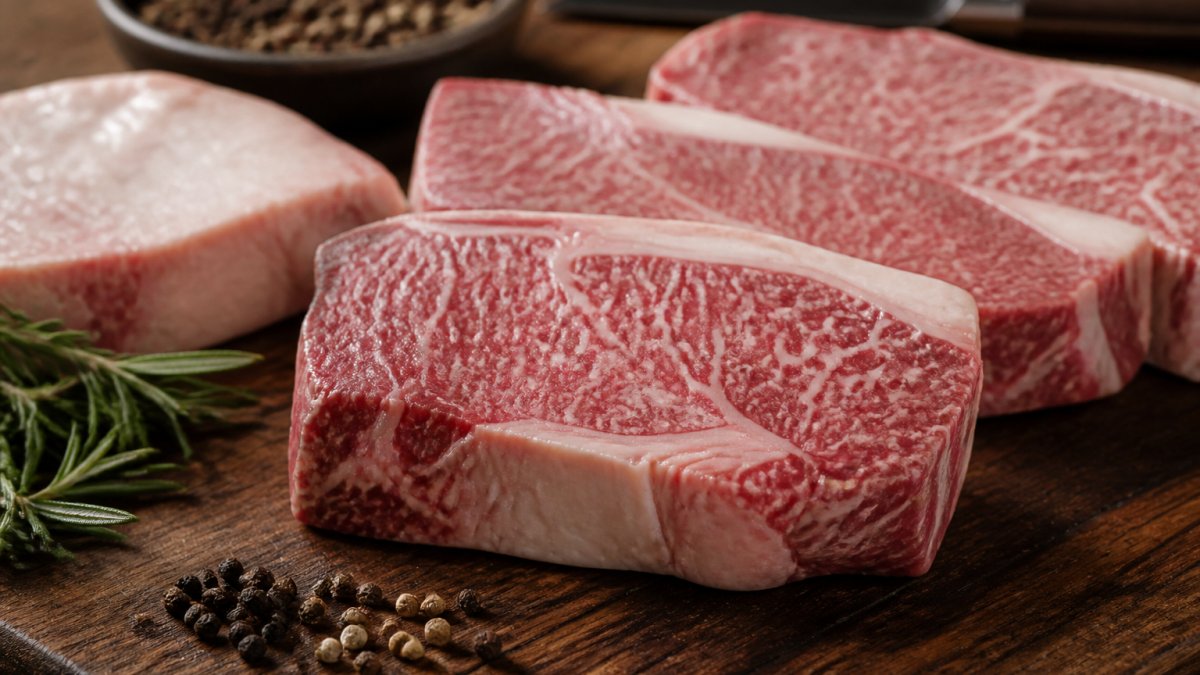
Two steaks from the same animal can grade differently, which is why price varies within a single herd. A higher marbling score means more of the muscle is fat, and that fat is what you are paying for.
The Three Grading Systems You Will See on a Label
Most competitors stop at "higher score, higher price". The practical gap is that the same animal is described differently under each system, so a score is only meaningful when you know the scale.
- Japanese grading. The Japanese Meat Grading Association assesses yield and quality separately. Quality runs from 1 to 5, with 5 broken into 5, 5+, and 5++. Marbling is one of several factors, alongside colour, brightness, firmness, and fat quality. A5 is the top of the common range, and A5 Wagyu is what most people picture.
- United States grading. The USDA uses Prime, Choice, and Select, with Prime carrying the most marbling. American Wagyu is often marketed by breed percentage rather than a single grade, because crossbred animals do not always reach Prime.
- Australian grading. Australia uses AUS-MEAT language and the Meat Standards Australia (MSA) eating-quality system. Marbling is scored on a numbered scale, and MSA grades the predicted eating experience of a specific cut cooked a specific way, a different question from "how much fat is in this muscle".
What the Score Actually Tells You About the Plate
A marbling score is a prediction, not a guarantee. It tells you how much intramuscular fat the assessor could see at the grading point, a strong signal for tenderness, juiciness, and richness, but says nothing about how the meat was aged, transported, or cooked.
Two consequences follow:
- A high-scoring steak cooked past medium-rare tastes drier than a lower-scoring steak cooked correctly, because the fat renders out before the muscle is ready.
- A high-scoring secondary cut, say, chuck or oyster blade, can be better value than a mid-scoring primary cut, because the marbling does the work a pricier cut would do through tenderness alone.
How to Read a Grade Without Being Misled
- Match the score to its system. "A5" is Japanese; "Prime" is American; a numbered marbling score is likely Australian. They are not interchangeable.
- Check the breed percentage. A crossbred animal can carry a strong marbling score without being fullblood, and the price should reflect that.
- Look for the cut name alongside the score. A grade without a cut is half the information.
- Treat unlabelled "Wagyu" claims with caution. Without a breed percentage, feeding system, or grading authority, the price is set by the word rather than the meat.
The Genetics and Breeding Behind Expensive Wagyu
Wagyu cattle genetics are the foundation of the entire price structure. The breed carries a genetic tendency to deposit fat within the muscle rather than only around it, the trait that separates wagyu from ordinary beef.
Building a herd with those genetics takes years. Fullblood animals are scarce, and breeders guard bloodlines carefully, so the cost of quality breeding stock flows straight into the price of the meat.
A common mistake is assuming any heavily marbled steak is wagyu.
Specialized Feeding, Longer Raising Periods, and Labor-Intensive Care
Specialized feeding and a longer raising period are where most day-to-day cost accumulates.
Low-stress handling matters more than most people realise. Calm animals eat consistently and marble more evenly, so producers invest in quiet yards, familiar handlers, and slow routines, labour-intensive care, and labour is expensive.
For grass-fed programs, the pasture itself becomes the cost centre. Rotational grazing, clean water, and animal welfare standards raise the per-head cost, and those costs are carried in the final price rather than absorbed.
Wagyu vs Grass-Fed Beef: What the Price Difference Buys You
Wagyu vs grass-fed beef comes down to fat distribution and eating experience. Grass-fed beef is leaner with a firmer texture and a more pronounced, mineral flavour.
Neither is "better" in the abstract. If you want a clean, lean steak, grass-fed is the right call. If you want the melt-in-the-mouth texture that made wagyu famous, you are paying for marbling, and marbling is expensive to produce.
| Factor | Grass-Fed Beef | Wagyu Beef |
|---|---|---|
| Fat distribution | Mostly around the muscle | Fine marbling within the muscle |
| Texture | Firmer, leaner bite | Soft, rich, melts quickly |
| Flavour | Pronounced, mineral | Rich, buttery, mild |
| Raising period | Standard | Often significantly longer |
| Price driver | Pasture and volume | Genetics, time, labour, scarcity |
Is Wagyu Beef Worth It? What You're Actually Paying For
Is Wagyu beef worth it? For most people, yes, if they treat it as an occasional luxury rather than a weekly staple.
The mistake is cooking it like a standard steak. Wagyu benefits from a hot, fast sear and a rest, and secondary cuts reward slow cooking where the fat renders down.
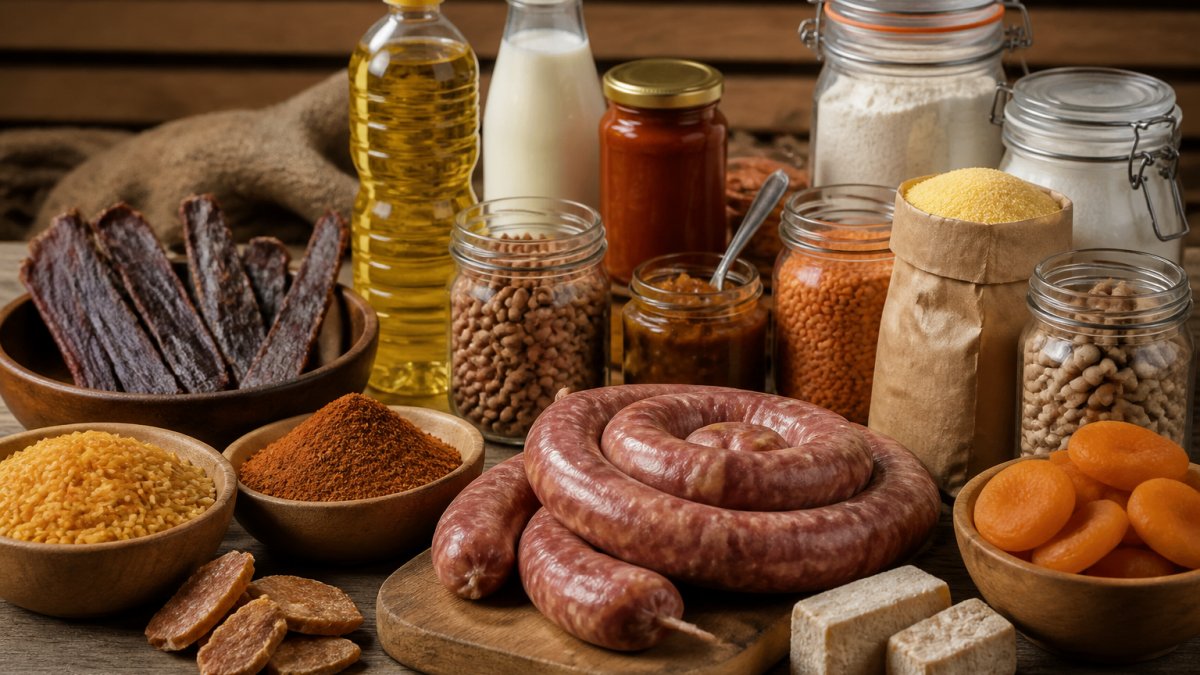
Where it makes the most sense is in products built around flavour rather than volume. Traditional South African preparations, including biltong and boerewors, use that marbling and rich flavour particularly well, exactly how we approach it at African Vibe.
Conclusion: Making Sense of the Wagyu Premium
The premium is not marketing. It is genetics, a longer raising period, specialised feed, labour-intensive care, and limited supply stacking on top of each other.
If you want to taste the difference for yourself, African Vibe offers 100% naturally grass-fed Black Angus wagyu beef, free from added antibiotics and hormone growth promotants, alongside traditional biltong, boerewors, and South African pantry favourites.
Frequently Asked Questions
What makes Wagyu beef so special compared to regular beef?
Wagyu beef comes from a specific Japanese cattle breed known for intense intramuscular fat, called marbling. This fat melts at a lower temperature than regular beef fat, giving it a rich, buttery flavour and tender texture. The cattle are raised with specialized diets, longer maturation periods, and low-stress handling. These factors, combined with limited supply and strict grading standards, create the premium eating experience that sets Wagyu apart from standard beef.
How much does 1 kg of Wagyu beef cost?
The price per kilogram depends on the cut, origin, and grade. Japanese A5 Wagyu typically costs the most, while Australian and American Wagyu sit lower. Secondary cuts are cheaper than prime cuts like ribeye or striploin. For current pricing on specific cuts and grades, check African Vibe's website or contact them directly for a quote based on your order.
Is Wagyu beef really worth the higher price?
Whether Wagyu is worth it depends on what you value. The marbling delivers a distinct buttery flavour and tenderness that regular beef cannot match. If you want a memorable dining experience or a special gift, the premium makes sense. For everyday meals, grass-fed beef offers excellent nutrition at a lower cost. Many buyers treat Wagyu as an occasional indulgence rather than a weekly staple.
How does Wagyu compare with grass-fed beef?
Wagyu is a breed, while grass-fed describes what cattle eat. Wagyu is known for heavy marbling and a rich, tender texture. Grass-fed beef typically has less marbling, a leaner texture, and a more pronounced beefy flavour. Grass-fed cattle are raised on pasture, while Wagyu often receive grain-based diets during finishing. Both can be high quality, but they deliver different eating experiences and price points.