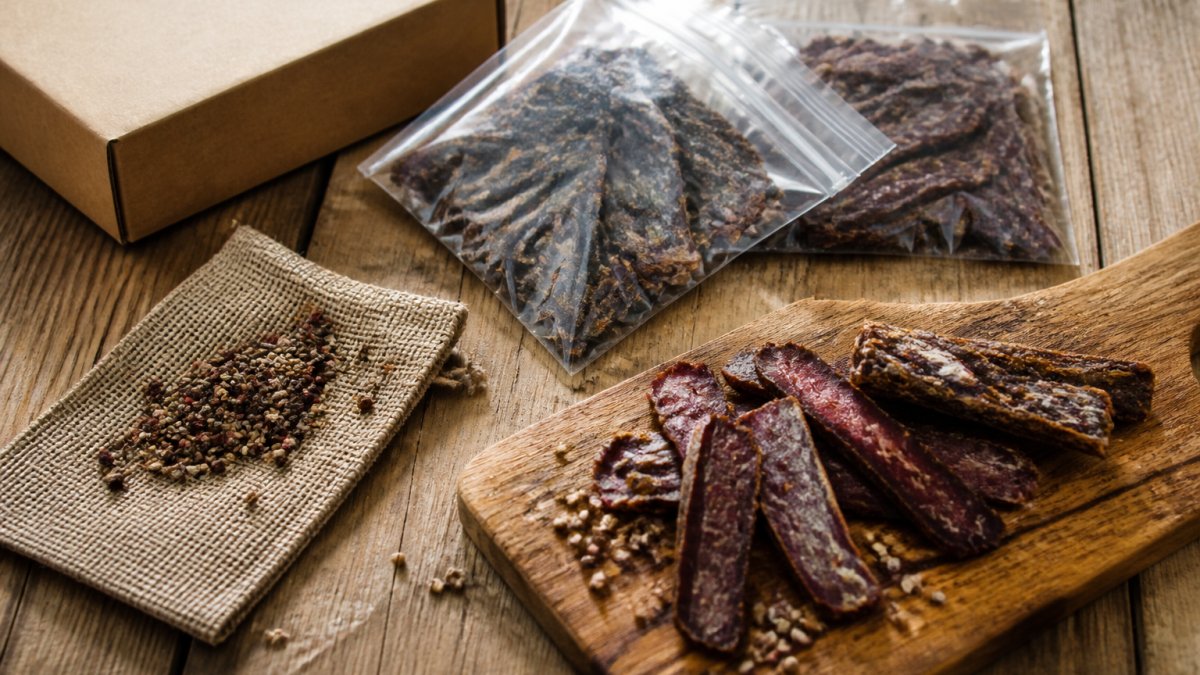
 blog
blog
Buy MSG-Free Biltong Online: A Guide to Fresh, Quality Options
Table of Contents
- Why MSG-Free Biltong Matters When Buying Online
- Understanding Biltong Ingredients and MSG Labelling
- Grass-Fed Beef Biltong: What Makes It Worth the Investment
- How to Order MSG-Free Biltong Online with Confidence
- Biltong Storage: Keeping Your Online Order Fresh
- Biltong vs Jerky: Understanding the Difference
- Conclusion: Making the Right Choice for Your Table
- Frequently Asked Questions
Last Updated: October 17, 2026
Why MSG-Free Biltong Matters When Buying Online
When you shop for MSG-free biltong online, you're choosing what goes into your body. MSG (monosodium glutamate) is a flavour enhancer in many commercial meat products, and some people are sensitive to it; others simply prefer food without artificial additives. At African Vibe, we're committed to biltong made with traditional methods and clean ingredients, free from added MSG.
Buying biltong online means you can't inspect or taste it first, so understanding labels and ingredients is essential. The difference between genuinely MSG-free biltong online and a product that just claims to be can be significant.
This guide covers reading ingredient labels, questions to ask suppliers, verifying freshness on arrival, storing your order, and whether the grass-fed premium is worth it.
Understanding Biltong Ingredients and MSG Labelling
MSG labelling can be confusing because the additive hides under several names. Monosodium glutamate itself is straightforward, but manufacturers also use "flavour enhancers," "hydrolysed vegetable protein," "yeast extract," and "natural flavours", all of which contain glutamates.
The useful skill is verifying a claim rather than trusting the front-of-pack. In Australia, food labelling is governed by the Australia New Zealand Food Standards Code, and added MSG is declared by name or as additive 621 (MSG in food). Related glutamates appear as 622-625, and flavour enhancers 627 and 631 are often used alongside MSG.
When shopping for biltong ingredients online, look for beef, salt, spices, and curing agents like nitrates or nitrites. Traditional South African biltong uses a simple blend, coriander, black pepper, garlic, sometimes chilli. If the list is long or contains unfamiliar additives, ask the supplier directly about MSG and its derivatives.
Reputable suppliers provide a full ingredient declaration. African Vibe lists exactly what goes into our biltong, with no MSG or hidden variants. If the label isn't on the product page, request it before purchase.
Added MSG versus naturally occurring glutamates
Glutamates occur naturally in aged beef, parmesan, mushrooms, tomatoes and soy sauce, so no real beef biltong tests at zero glutamate. "MSG-free" means no MSG or glutamate-based flavour enhancer has been added. A supplier who claims "zero glutamates" is misinformed or overselling. Ask directly: "Is there any added MSG, yeast extract, hydrolysed vegetable protein, or flavour enhancer 621-625?" A written yes-or-no answer beats any badge on the pack.
A practical label-check routine before you buy
- Open the product page and find the full ingredient list, not the marketing summary. If it is not published, email or message the supplier and ask for it.
- Scan for 621-625, 627 and 631, plus the words "yeast extract," "hydrolysed vegetable protein," "autolysed yeast" and "natural flavour." Any of these means added glutamates.
- Check the curing agents. Sodium nitrate (251) and sodium nitrite (250) are traditional in biltong and legal in Australia; some buyers avoid them, so confirm whether they are used.
- Check for allergens and declared "may contain" statements, particularly if you are gluten-free or managing a sulphite sensitivity.
- Ask for the batch production date. A label tells you what is in the product; the production date tells you how fresh it is.
Some suppliers use sodium nitrate or nitrite to extend shelf life during shipping. These are traditional curing agents, but some people avoid them, so a genuinely MSG-free biltong online supplier should be transparent about which preservatives they use and why.
Grass-Fed Beef Biltong: What Makes It Worth the Investment
Grass-fed beef biltong tastes different because diet affects the meat's flavour and nutrition. Grass-fed cattle develop more complex muscle structure and higher omega-3 levels than grain-fed, giving richer, more authentic flavour, which is why traditional South African makers have always used grass-fed beef.
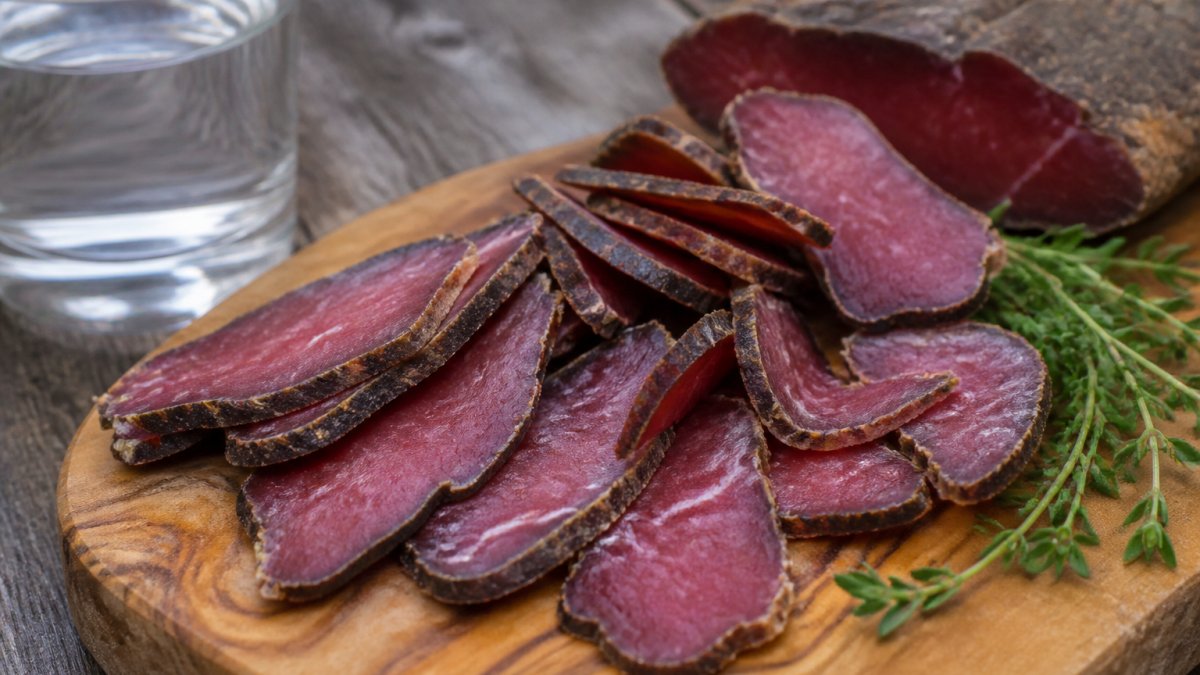
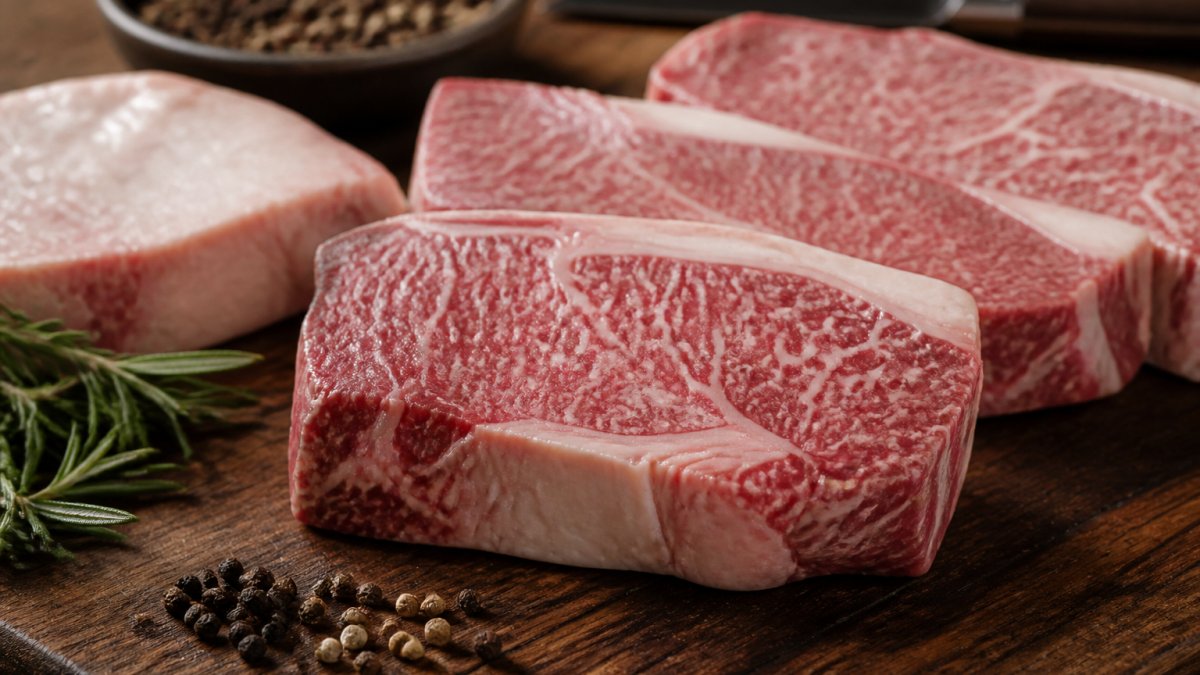
African Vibe uses 100% naturally grass-fed Black Angus wagyu beef, free from antibiotics and hormone growth promotants. This choice affects every aspect of the final product: the colour is deeper, the texture is firmer, and the flavour is unmistakably more strong.
Verify the claim: some companies say "grass-fed" but use grain-finished or blended sources. Ask about breed, where the cattle are raised, and certifications. African Vibe can answer all of these, and we encourage customers to ask.
How to Order MSG-Free Biltong Online with Confidence
Ordering biltong online requires a few precautions. Research the supplier's reputation: look for reviews mentioning freshness, flavour and arrival condition, check how long they've operated, and confirm their contact information is transparent.
Before ordering, ask the supplier about production frequency, shipping method, and transit protection. A good supplier answers promptly with specifics, African Vibe makes biltong fresh and uses insulated packaging.
Compare value on price per 100g, not pack price
Most product pages quote a pack price, which makes it hard to compare a 200g bag against a 500g bag or a 1kg bulk pack. The single most useful number is price per 100g. Divide the pack price by the pack weight in grams, then multiply by 100. A 500g pack at $45.00 works out to $9.00 per 100g; a 200g pack at $19.00 works out to $9.50 per 100g. The larger pack is better value per gram, but only if you will eat it within its shelf life. When you compare MSG-free biltong online, put these four columns side by side: pack weight, price per 100g, flavour, and whether the ingredient list is published. A product that is cheap per 100g but hides its ingredients is not a like-for-like comparison with one that is transparent.
Delivery, shipping cost and freshness on arrival
Shipping is where online biltong orders most often disappoint. Ask three questions:
- Where do you deliver, and how long does it take? Delivery timeframes vary by region and by courier. Confirm your postcode is covered and get an expected window in business days, not a vague "fast shipping" claim.
- What does shipping cost, and is there a free-shipping threshold? Many suppliers set a minimum order value for free delivery; work out whether adding a second pack to reach the threshold costs less than paying the shipping fee.
- How is the product protected in transit? Biltong is shelf-stable, but heat softens the texture and can affect quality. Insulated packaging is important for warm-weather delivery.
Inspect your order the same day: it should feel dry and smell of spiced beef, not musty. If it arrives warm or the packaging is damaged, photograph it and contact the supplier before opening the inner pack.
Know your consumer rights
If an order arrives damaged, spoiled or materially different from what was described, Australian Consumer Law gives you rights against the supplier, including a remedy for products that are not of acceptable quality or not as described. Keep your order confirmation, tracking details and photographs. A supplier who publishes a clear returns and refunds policy is easier to deal with than one who does not.
When you place an order for MSG-free biltong online, confirm the following:
- Full ingredient list is provided before purchase
- Production date or "made fresh" frequency is stated
- Shipping method protects the product from heat and damage
- Delivery area includes your location
- Return or refund policy is clear if the product doesn't meet expectations
- Payment method is secure
African Vibe accepts online orders and delivers across the Sydney region. We provide tracking information so you know when your biltong will arrive. Our packaging is designed to keep the product fresh, and we're happy to answer any questions before you order.
Biltong Storage: Keeping Your Online Order Fresh
Biltong storage is straightforward: biltong is air-dried and shelf-stable, but proper conditions maintain quality and flavour.
Inspect it immediately, it should feel dry and smell like spiced beef, not musty. Biltong keeps best in a cool, dry place, ideally 15°C to 20°C; in a warm climate or summer, refrigerate it promptly.
Store biltong in an airtight container or resealable bag. This prevents it from absorbing moisture and odours from the fridge. Properly stored, biltong will keep for 2-3 weeks in the fridge, or longer if vacuum-sealed.
Avoid direct sunlight and heat sources, which fade the spices and soften the texture.
Avoid opening and closing the package repeatedly, which exposes the biltong to air. Buy quantities you'll consume in a reasonable timeframe, or split large orders into smaller resealable portions.
Biltong vs Jerky: Understanding the Difference
Biltong and jerky are both dried meat snacks, but different methods give them distinct flavour profiles.
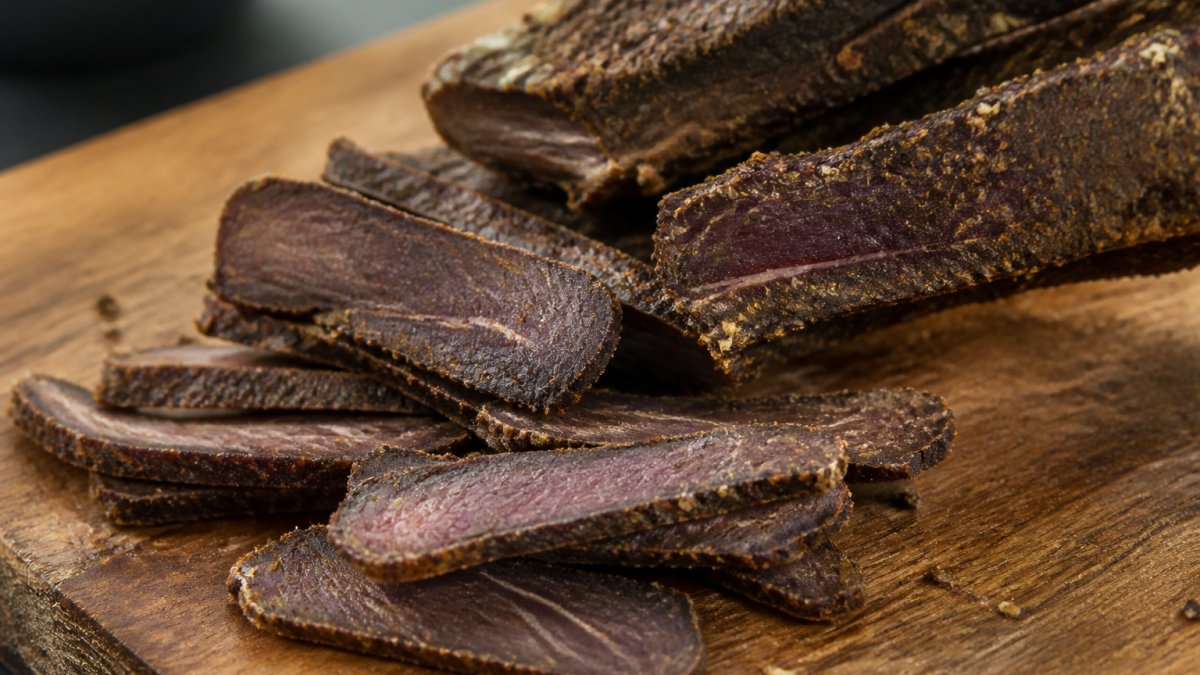
Biltong is air-dried using a traditional South African method. The meat is marinated in vinegar and spices, then hung to dry slowly over several days. This process concentrates the flavour and creates a tender, slightly chewy texture. Biltong is typically softer than jerky and has a more complex spice profile.
Jerky is usually cured with salt and smoke, then dried at higher temperatures, creating a drier, chewier, smokier product. Drying takes 12-24 hours rather than several days.
Both are high-protein, low-carb snacks. Biltong often has slightly more fat from traditional preparation, which some prefer for satiety; jerky is leaner and more shelf-stable, popular for camping and outdoor activities.
When you order biltong vs jerky online, you're choosing between two eating experiences: tender, flavourful biltong closer to the South African original, or crunchier, smokier jerky. Many people enjoy both, different traditions, not competing products.
African Vibe specializes in authentic biltong using traditional methods. We also offer boerewors and other South African specialities for customers exploring the full range of authentic flavours.
Conclusion: Making the Right Choice for Your Table
Buying MSG-free biltong online is an investment in quality, transparency, and authentic flavour. The best suppliers are those who are willing to answer your questions, provide full ingredient lists, and deliver products that arrive fresh and in good condition.
When you order from African Vibe, you're choosing biltong made from 100% naturally grass-fed Black Angus wagyu beef, prepared using traditional South African methods, and free from MSG and unnecessary additives. Our commitment to quality means every order is made fresh and shipped with care to ensure it reaches your table in perfect condition.
Frequently Asked Questions
Where can I buy MSG-free biltong online with reliable delivery?
Specialist suppliers now offer nationwide delivery of MSG-free biltong across the region. Look for suppliers who clearly state their ingredients on product pages, offer fresh production, and provide transparent delivery timelines. Check that they deliver to your postcode and offer courier options that protect meat quality during transit. Ask about arrival conditions before ordering.
How can I tell whether biltong is genuinely MSG-free?
Check the full ingredient list on the product page, MSG appears as monosodium glutamate or sometimes as 'flavour enhancer (621)' under food additive codes. Authentic biltong relies on natural spices and salt for flavour, not added MSG. Suppliers who emphasise 'no nasties', preservative-free, or traditional recipes are typically MSG-free, but always verify the ingredient list. Avoid products listing just 'spices' without detail, as this can hide additives.
Is grass-fed beef biltong worth paying more for online?
Grass-fed beef produces biltong with superior flavour, texture, and nutritional profile. Grass-fed cattle develop richer meat with better fat distribution, creating more tender, flavourful biltong that doesn't dry out as quickly. The beef also contains higher levels of omega-3 fatty acids and conjugated linoleic acid. When ordering online, grass-fed options justify the premium.
How should I store biltong after it arrives from an online order?
Keep biltong in an airtight container in a cool, dry place away from direct sunlight, a pantry or cupboard works well. Once opened, consume within 2-3 weeks for soft biltong or up to 4-6 weeks for harder varieties. Avoid the fridge unless your home is very warm. Proper storage ensures your online purchase stays fresh.
Ready to experience authentic South African biltong? Order now from African Vibe and discover why our customers return again and again for the quality, freshness, and genuine flavour that only traditional preparation can deliver.