 How-to
How to Choose Quality Biltong: A Buyer's Guide
Last Updated: October 26, 2026
Quick Summary
To choose quality biltong, check the meat, ingredients, texture and aroma rather than trusting the label. Look for lean, dark red, fine-grained beef, watch for wheat, soy sauce or malt vinegar, and expect a firm but yielding texture with a coriander and pepper aroma.
- Quality biltong starts with the meat, spice blend and drying method, not the label.
- Our biltong is 100% naturally grass-fed Black Angus wagyu beef with no added antibiotics or hormone growth promotants.
- Choose lean biltong for a firmer, protein-dense chew or fatty for a richer, softer bite.
- Pick wet biltong if you like steak medium-rare and dry biltong if you prefer it well done.
- In store you can don a glove, hand-pick your piece and have our team slice it on the spot.
Table of Contents
- What Separates Quality Biltong From the Rest
- Lean vs Fatty Biltong: Choosing Your Cut
- Wet vs Dry Biltong: Pick It Like You'd Order a Steak
- Whole vs Sliced Biltong: Freshness and Convenience
- Frequently Asked Questions
What Separates Quality Biltong From the Rest
Quality biltong starts with the meat, spice blend and drying method, not the label. Ours is 100% naturally grass-fed Black Angus wagyu beef, free from added antibiotics and hormone growth promotants.
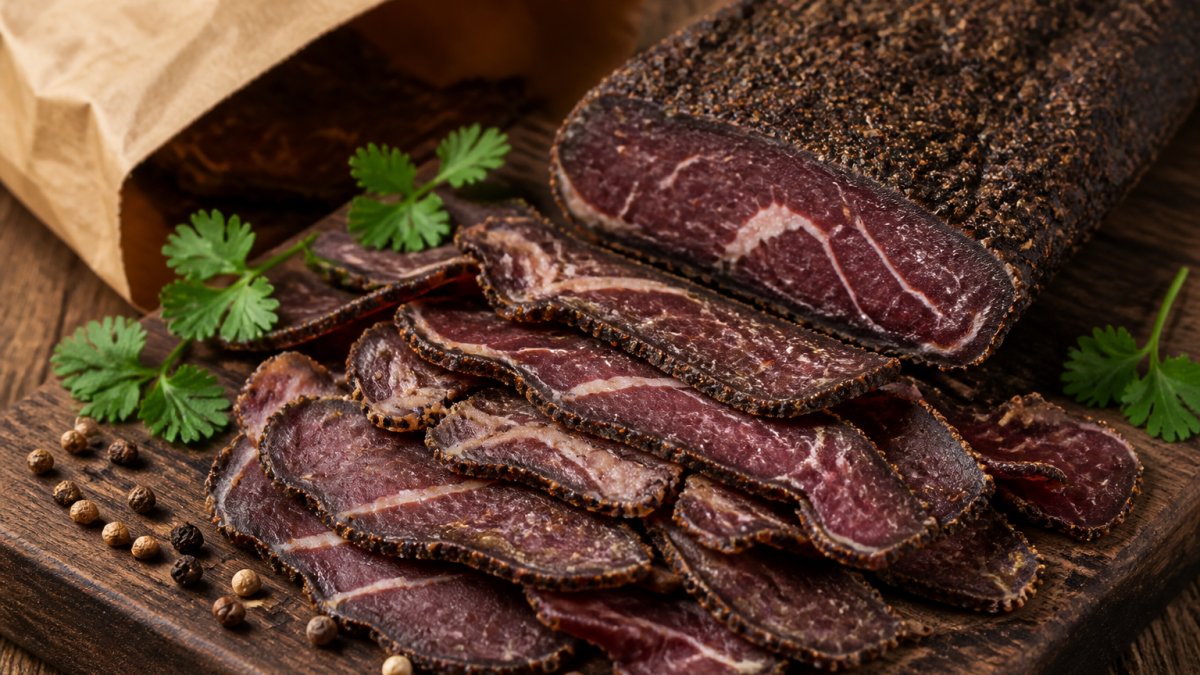
Traditional biltong is air-dried seasoned beef cured with vinegar, salt, coriander and black pepper. Check the meat (lean, dark red, fine grain), ingredients (watch for wheat, soy sauce or malt vinegar), texture (firm but yielding) and aroma (coriander and pepper, not a chemical tang). "Premium" means nothing, read the ingredients panel.
See beef jerky vs biltong, how to store biltong, or buy chilli lean biltong.
Lean vs Fatty Biltong: Choosing Your Cut
Our range of cuts covers lean or fatty. Lean is trimmed and protein-dense with a firmer chew; fatty keeps more fat, so it tastes richer and stays softer.
Shop traditional lean biltong or order traditional fatty biltong.
Wet vs Dry Biltong: Pick It Like You'd Order a Steak
A good guide is to choose your Biltong like you'd order your steak- if you like your steak medium-rare then "wet" sliced Biltong is perfect. Those who prefer their steak well done, try the dry Biltong selection.
Your steak order | Biltong style | What to expect |
|---|---|---|
Rare to medium-rare | Wet | Soft, moist, deep red centre |
Medium | Medium | Balanced moisture and chew |
Well done | Dry | Firm, dense, longer chew |
Wet biltong suits slicing fresh and eating soon; dry travels better and keeps longer.
Whole vs Sliced Biltong: Freshness and Convenience
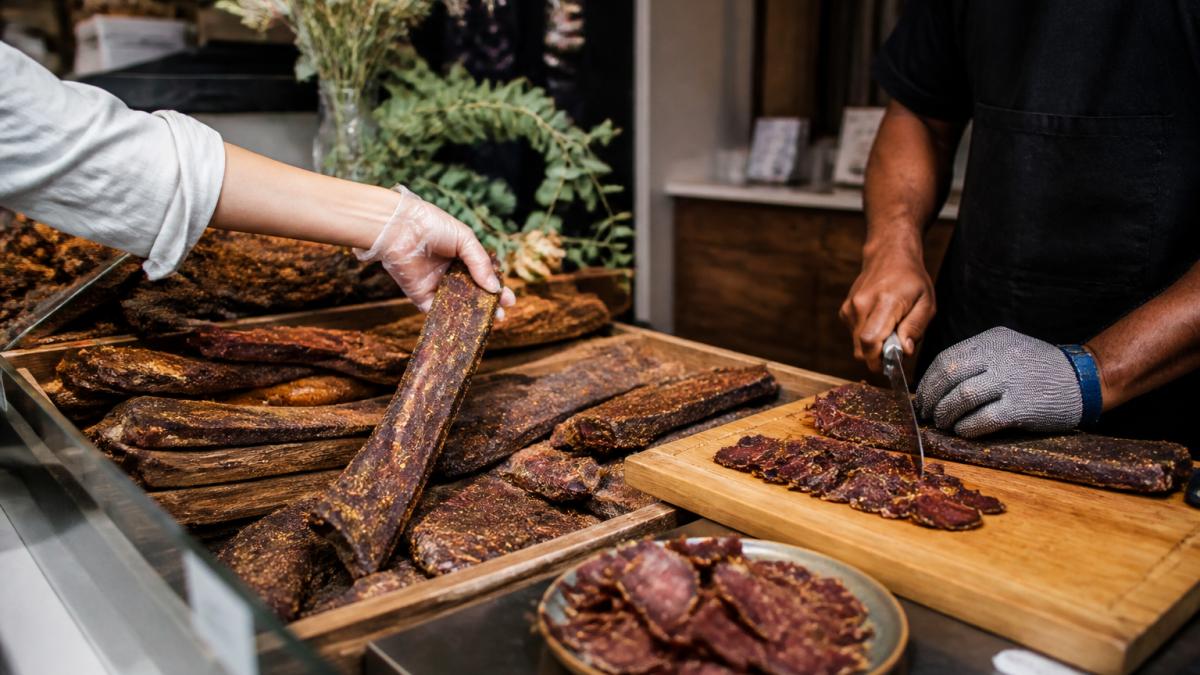
A customer wearing a food-safe glove hand-picking a whole piece of biltong from a deli counter, with a staff member slicing biltong on a board nearby
Sliced is ready to eat and perfect for sharing; whole pieces let you cut as you go so the inside stays moist.
In store, you can don a glove and hand-pick your perfect piece. Our team will slice it for you on the spot. Or take it whole and cut it yourself as needed to preserve that freshness.
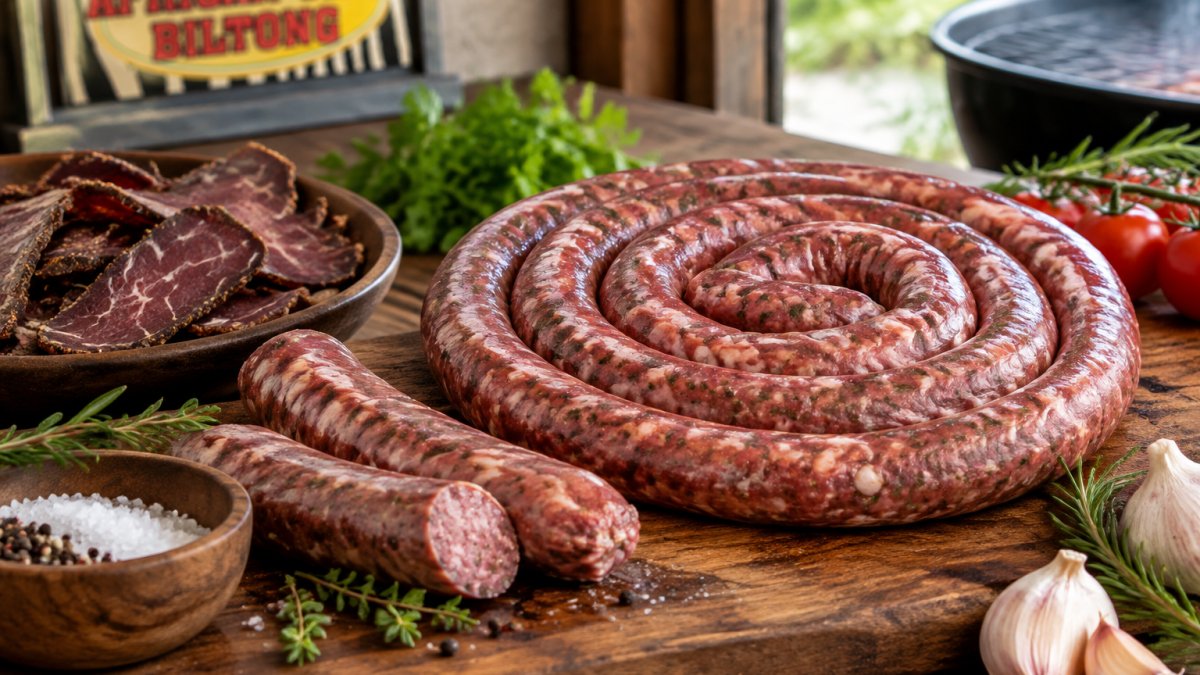
Our range of Biltong products includes whole pieces or sliced Biltong, snap sticks and Drywors.
Our flavours: Traditional, chilli, chilli chutney.
Frequently Asked Questions
How can you tell if biltong is good quality?
Good quality biltong starts with the meat and the cure. Look for a deep red-brown colour, a firm but not brittle texture, and a clean meaty smell rather than a sour or musty one. Ask what cut it is, whether it is lean or fatty, and how dry it is. Biltong made from grass-fed beef and cured with vinegar, salt, coriander and black pepper, without heavy preservatives, is a strong sign of quality.
What is the difference between wet and dry biltong?
Wet biltong is air-dried for less time, so it stays softer and juicier in the middle. Dry biltong is cured longer and has a firmer, chewier bite. A simple guide is to choose it like you'd order your steak: if you like medium-rare, go for wet sliced biltong; if you prefer well done, try the dry selection. Both are traditional, and the right pick comes down to texture preference.
How should biltong be stored to keep it fresh?
Whole pieces keep best because there is less exposed surface. Store biltong in a paper bag or breathable container in a cool, dry spot, and avoid sealing it in plastic where it can sweat. For longer storage, refrigerate or freeze whole pieces and slice as needed. Sliced biltong is best eaten within a few days. Taking it whole and cutting it fresh as you go is the simplest way to preserve that just-bought taste.
Finding biltong that tastes like home shouldn't be a gamble. At African Vibe, we hand-pick the cut with you, slice it fresh, and stock Traditional, chilli and chilli chutney flavours alongside snap sticks and Drywors. Get started with African Vibe and taste the difference quality beef makes.