 How-to
Traditional South African Koeksisters Recipe, Step by Step
Last Updated: November 15, 2026
Quick Summary
A traditional koeksisters recipe uses plaited strips of dough, fried until golden and then soaked in cold lemon, ginger and cinnamon syrup. The dough is rested before braiding, and the oil should sit at about 170 degrees Celsius for a crisp, golden result.
- Use 500 g cake flour, 150 ml milk and one egg for the dough.
- Rest the kneaded dough for 30 minutes before rolling it out.
- Braid three strips loosely so the koeksister can puff in the oil.
- Keep the syrup cold, between 4 and 8 degrees Celsius, before dipping.
- Soak koeksisters for two to three minutes to keep the shell crisp.
Table of Contents
- What Makes Koeksisters Traditional and How They Differ From Cape Malay Koesisters
- Ingredients for the Koeksister Dough and Spiced Syrup
- Mixing, Kneading and Rolling the Dough
- How to Braid Koeksisters Into Shape
- Frying Koeksisters and Dipping in Cold Syrup
- Koeksister Syrup Recipe: Preparing and Timing the Syrup
- How to Store Koeksisters and Keep Them Crisp
- Frequently Asked Questions
What Makes Koeksisters Traditional and How They Differ From Cape Malay Koesisters
If you have ever tasted a proper koeksister, you know it is not like any other sweet bake, and this koeksisters recipe guide shows you how to get that texture at home. The question of what makes a koeksister traditional comes up often, and the honest answer is the plaited shape, the crisp outside, and the sticky spiced syrup that soaks into every layer.
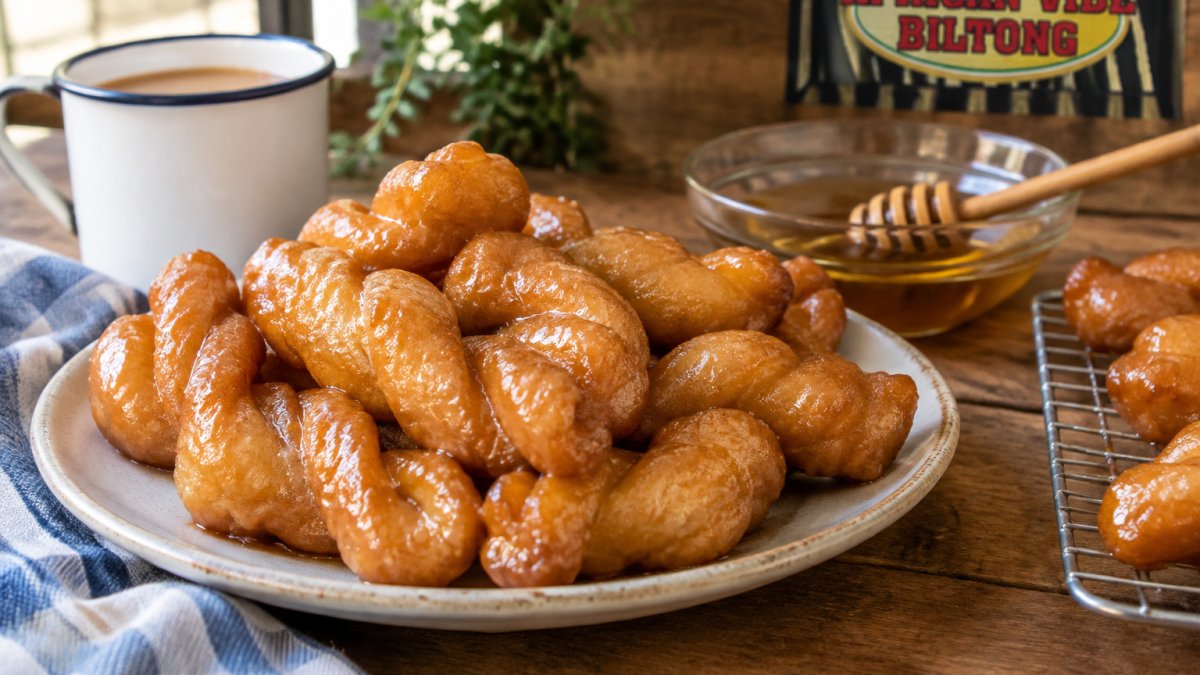
Afrikaner koeksisters are usually plaited from strips of dough, fried until golden, then dunked in cold syrup. The syrup is often flavoured with lemon, ginger and cinnamon, and the bake is known for a firm, slightly chewy centre.
Cape Malay koesisters are a different bake altogether. They are generally made from a softer, spiced dough, often with a coconut or cardamom note, and they are shaped as rounds or twisted pieces rather than plaits. Many people confuse the two names, so it helps to know which style you want before you start.
Quick tip: Decide on the style first. The shape, dough and syrup all change depending on which one you are making.
- Afrikaner koeksister: plaited, crisp, cold syrup
- Cape Malay koesister: softer, spiced, often round or twisted
Ingredients for the Koeksister Dough and Spiced Syrup
You will need simple pantry items for this koeksisters recipe, covering both the dough and the syrup. Here is what to gather before you start:
For the dough:
- 500 g cake flour, plus extra for dusting
- 1 teaspoon baking powder
- 1 teaspoon ground ginger
- 1 teaspoon mixed spice
- 1 pinch salt
- 50 g butter, softened
- 1 egg
- 150 ml milk
- Oil for deep-frying
For the spiced syrup:
- 2 cups sugar
- 1 cup water
- Juice of 1 lemon
- 1 teaspoon lemon zest
- 1 cinnamon stick
- 1 slice fresh ginger
Plain or self-raising flour works in a pinch, but cake flour gives the lightest, most traditional texture. You can find the spices and pantry items you need in our rusks, biscuits and tarts range, or buy traditional koeksisters in Sydney if you would rather skip baking altogether. Our Biltong Snapsticks Chilli are another popular pick for a South African-style spread.
Mixing, Kneading and Rolling the Dough
Start by rubbing the butter into the dry ingredients until the mix looks like coarse crumbs. Then add the egg and milk, and stir until a soft dough forms.
Knead the dough for about five minutes. It should feel smooth and slightly tacky, not dry. Cover it and rest it for 30 minutes so the flour can absorb the liquid.
Roll the dough out on a floured surface to about 1 cm thick. Cut it into strips roughly 1 cm wide and 15 cm long. Keep the strips covered while you work so they do not dry out.
Watch out: Dough that is too dry will crack when you braid it. If it cracks, add a teaspoon of milk and knead gently.
How to Braid Koeksisters Into Shape
Take three strips of dough and pinch the ends together at the top. Plait the strips loosely, then pinch the bottom ends together and tuck them underneath. A loose plait gives the koeksister room to puff in the hot oil.
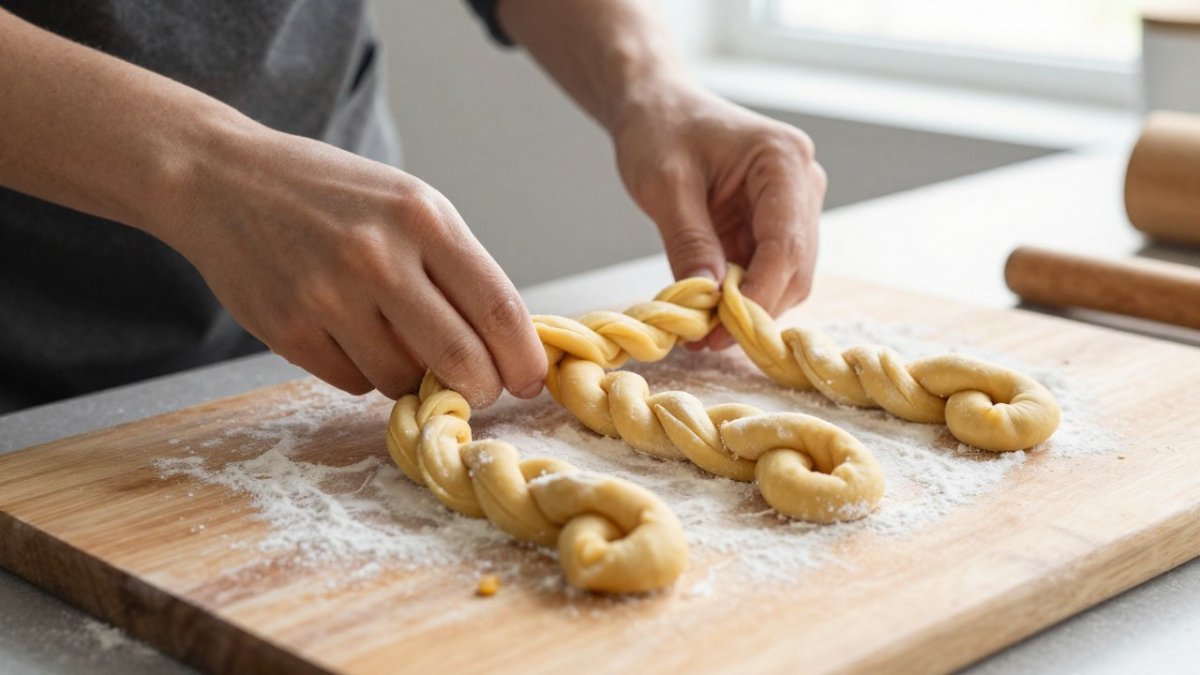
Repeat until all the dough is shaped. Lay the finished koeksisters on a floured tray and rest them for 10 minutes before frying.
!Hands braiding three strands of golden dough on a floured wooden board
Frying Koeksisters and Dipping in Cold Syrup
This is the stage where a good dough can still turn into a greasy or soggy batch, so treat the oil and the syrup as two separate temperature jobs. The oil needs to sit at about 170 degrees Celsius, and the syrup needs to be properly cold, ideally between 4 and 8 degrees Celsius, straight from the fridge. The reason is simple: when a hot koeksister hits cold syrup, the sudden drop in temperature helps the syrup settle into the crust. Warm syrup produces a limp, syrupy shell rather than the crisp, glassy coating that defines the traditional bake.
Setting up the oil
Use a deep, heavy-based saucepan and fill it no more than one-third full so the oil has room to rise when the dough goes in. A kitchen thermometer clipped to the side of the pan is the most reliable way to hold the temperature. If you do not have one, drop in a cube of bread about 2 cm across: at 170 degrees Celsius it should sink briefly, then rise and brown steadily over about 60 seconds. If it browns almost immediately, the oil is too hot; if it barely bubbles, it is too cool.
Frying in batches
Fry two or three koeksisters at a time, depending on the width of your pan. Crowding drops the oil temperature sharply and gives you pale, oil-logged results. Turn each koeksister once, after about two minutes, and look for a deep golden-brown colour on both sides, roughly four to five minutes total per batch. Lift them out with a slotted spoon or tongs and drain on a wire rack set over paper towel for about 30 seconds. Do not let them cool completely before dipping; the hot-from-the-oil contrast is what drives the syrup in.
Dipping and soaking
Lower each koeksister into the cold syrup and turn it once after about a minute so both sides are coated. A soak of two to three minutes gives a syrupy centre with a still-crisp shell. If you leave them in much longer, the crust softens all the way through. Lift them out, let the excess syrup drip back into the bowl for a few seconds, then place them on a wire rack, not on paper towel, which will stick to the wet syrup. Once the koeksisters have drained, their fragrant sweetness can be enjoyed on its own or alongside the warm, earthy notes of African spices and seasonings.
Watch out: If the koeksisters come out greasy rather than crisp, the oil was almost certainly below 170 degrees Celsius. If they are dark outside and doughy inside, the oil was too hot and the crust set before the centre cooked. Pale, soft koeksisters usually mean the oil was too cool or the pan was overcrowded. Soggy koeksisters almost always trace back to warm syrup or an overlong soak.
!A batch of golden plaited koeksisters draining on a wire rack beside a bowl of cold spiced syrup
Koeksister Syrup Recipe: Preparing and Timing the Syrup
Make the syrup before you touch the dough, because it must be completely cold, and preferably chilled overnight, by the time the first koeksister comes out of the oil. The ratio matters: two parts sugar to one part water by volume gives a syrup thick enough to cling without turning to candy. Too little sugar and the coating is thin and watery; too much and it sets hard on the crust.
Method
Combine 2 cups of white sugar, 1 cup of water, the juice and zest of one lemon, one cinnamon stick and a slice of fresh ginger in a heavy-based saucepan. Bring it to a gentle boil over medium heat, stirring only until the sugar dissolves, stirring after that point encourages crystals. Once it boils, reduce the heat and simmer for about 10 minutes. You are looking for a syrup that has reduced slightly and coats the back of a spoon in a thin film. If you want a more precise check, a drop on a cold plate should hold a soft, syrupy bead rather than run straight off.
Why the lemon and spices matter
The lemon juice does two jobs: its acidity balances the sweetness and helps stop the sugar crystallising as the syrup cools. The cinnamon and ginger infuse gradually, so a longer, gentler simmer gives a rounder flavour than a hard boil. Remove the cinnamon stick and ginger slice before chilling so they do not turn the syrup bitter over time.
Cooling and storage
Let the syrup cool to room temperature, then refrigerate it in a covered jug or jar. It will keep for up to two weeks in the fridge, so making it the evening before a frying session is practical as well as traditional. If you are short on time, stand the jug in a bowl of iced water and stir until it drops below 8 degrees Celsius.
Watch out: If the syrup thickens too much while simmering, add a tablespoon of hot water and stir gently, do not add cold water, which can seize the sugar. If it has crystallised, return it to the heat with a splash of water and warm it gently until the crystals dissolve.
Scaling and freezing
The syrup scales cleanly: for a double batch, double every ingredient and use a wider pan so the depth stays roughly the same. Leftover syrup is useful, warm it slightly and spoon it over pancakes, or use it to poach sliced apples. It does not freeze well because the sugar concentration changes on thawing, so keep it in the fridge instead.
How to Store Koeksisters and Keep Them Crisp
To keep them crisp, avoid sealing them while they are still warm. If you enjoy baking other South African treats at home, you can learn how to make gluten-free South African rusks using a simple guide. Let them cool completely first. If you are planning to send South African treats as a present, you can browse premium South African food gift options. If you want to freeze them, place the cooled koeksisters in a single layer before bagging them. Reheat gently in a low oven to bring back some of the crunch.
Making koeksisters at home takes patience, but the result is worth every step. Get the syrup ready early, keep the dough cool, and fry at a steady temperature. If you want a shortcut, African Vibe stocks fresh koeksisters in store and online, so you can enjoy the real taste of home whenever you need it.
Frequently Asked Questions
What are traditional South African koeksisters made of?
Traditional koeksisters are made from a soft, lightly spiced dough of flour, butter, egg, milk, baking powder and a little ginger or cinnamon. After frying, they are dipped in a cold, sticky syrup flavoured with lemon, ginger and sometimes cinnamon or mixed spice. The contrast between the warm, crisp outside and the cold, sweet syrup is what defines the traditional treat, so the dough should be firm enough to hold its braid and the syrup should be properly chilled before dipping.
Should koeksister syrup be hot or cold when dipping?
The syrup should be cold or at room temperature when you dip hot-fried koeksisters, while the koeksisters themselves should come straight from the oil. This temperature contrast lets the syrup soak into the crisp shell without making it soggy. Hot syrup over hot koeksisters makes them heavy and wet. Let the syrup cool completely after boiling, and dip each koeksister for about 30 seconds, turning once, before draining on a rack.
How long do homemade koeksisters keep?
Homemade koeksisters keep best at room temperature in an airtight container for about two to three days. Store them in a single layer, with baking paper between layers if stacking, so they do not stick together. Refrigerating makes the syrup firm and can soften the crisp outside, so only chill them if your kitchen is very warm. Their texture is best within the first day.
Can koeksisters be frozen?
Yes, koeksisters freeze well if they are fully cooled and dipped in syrup first. Place them in a single layer on a tray to freeze, then transfer to an airtight container with baking paper between layers.