 How-to
How to Make Samoosa Pastry, Fillings and Folds
Last Updated: November 22, 2026
Quick Summary
Samoosa pastry is the thin sheet that wraps the spiced filling, and spring-roll sheets are the standard choice in South African home kitchens because they are strong, easy to fold and hold their shape in hot oil. Filo gives a flakier, more delicate crunch, while homemade wrappers take more time but give you full control.
- The mince filling must cool completely for at least 20 minutes before folding, or the pastry turns soggy.
- Keep pastry sheets under a damp tea towel while you work, because they dry out fast and crack at the corners.
- Fry in small batches of three or four at 175°C to 180°C, turning once, and drain on a rack rather than paper towel.
- Raw folded triangles freeze for up to three months and go straight into the oil from frozen with a minute or two extra cooking time.
- Bake brushed triangles at 200°C or air-fry them for a drier, crisper shell with far less oil.
Table of Contents
- Why the Samoosa Holds a Place in South African Kitchens
- A Mince Samoosa Recipe Built on Cape Malay Spicing
- Choosing Samoosa Pastry: Spring-Roll Sheets, Filo and Homemade Wrappers
- How to Fold Samoosas Into Neat Triangles
- Frying for a Crisp, Golden Shell
- Baked Samoosas and Air-Fryer Options
- Make-Ahead Storage, Reheating and Food Safety
- Serving Samoosas With Chutneys and Dipping Sauces
- Frequently Asked Questions
Why the Samoosa Holds a Place in South African Kitchens
The samoosa arrived in South Africa with indentured labourers from India in the 1800s and never left.
Walk into any South African gathering and you will find a tray of them. Crisp, golden and savoury, they are the snack that starts every party.
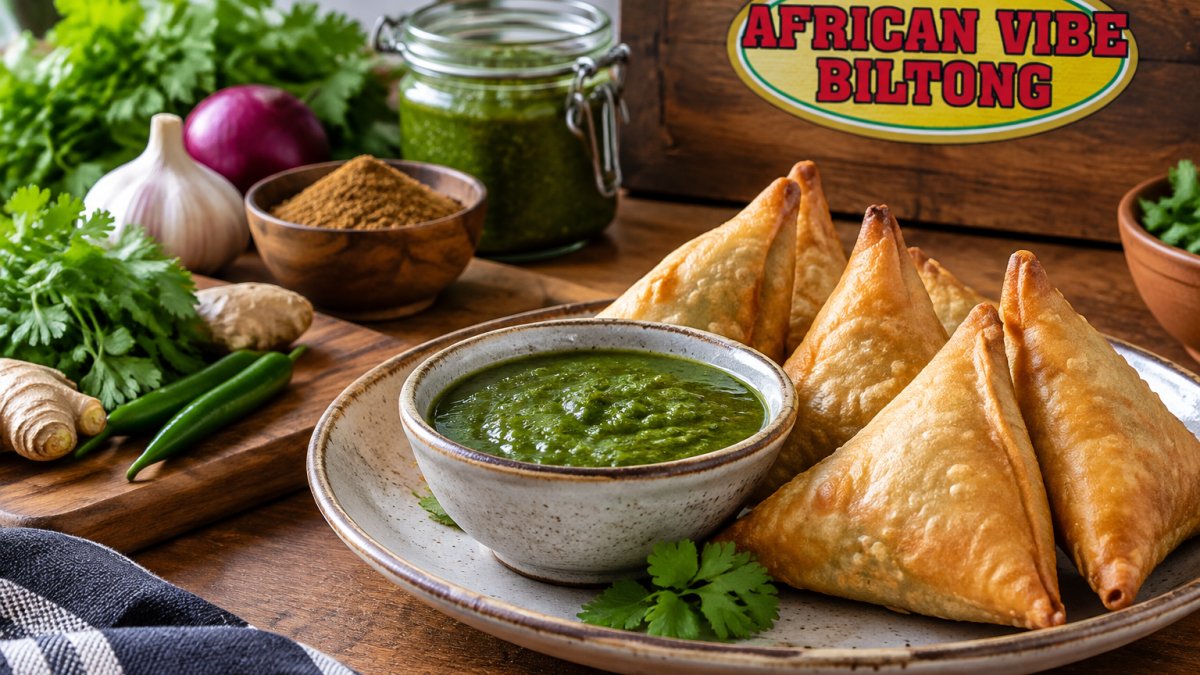
The samoosa is a thin pastry triangle filled with spiced mince or potato, folded and fried until crisp. South African cooks make it with spring-roll sheets and Cape Malay spices, which gives it a flavour distinct from the Indian original.
If you want to see how samoosas sit alongside other traditional snacks on a menu, our guide to traditional South African snacks lays out the full spread.
A Mince Samoosa Recipe Built on Cape Malay Spicing
Here is our mince samoosa recipe, sized for a family batch of about 30 triangles. It is the version we make when the whole family is coming over.
What Goes Into the Filling
- 500 g minced beef
- 1 large onion, finely chopped
- 2 cloves garlic, crushed
- 1 thumb fresh ginger, grated
- 1 tsp ground coriander
- 1 tsp ground cumin
- 1 tsp mild chili powder
- 1/2 tsp ground cinnamon
- 1/2 tsp ground cloves
- 1 cup frozen peas
- 1 small potato, boiled and cubed
- Small bunch fresh coriander, chopped
- Salt to taste
- 2 tbsp ghee or butter
The cinnamon and clove are what make this Cape Malay rather than straight Indian. Do not skip them. If you would rather buy the blend ready-made, our South African sauces and spices range has what you need for the filling.
Cooking the Mince and Cooling It Properly
Heat the ghee in a wide pan. Soften the onion until golden, then add the garlic and ginger for a minute. Add the dry spices and stir for 30 seconds, until fragrant.
Add the mince and brown it well, breaking up any lumps. Stir in the potato and peas, season with salt, and cook for another five minutes. Finish with the fresh coriander.
Now the part most recipes rush: cool the filling completely before you fold. Warm filling steams the pastry from the inside and turns it soggy. Spread it on a tray and let it sit for at least 20 minutes.
Choosing Samoosa Pastry: Spring-Roll Sheets, Filo and Homemade Wrappers
Samoosa pastry is the thin sheet that wraps the filling, and the type you choose decides how crisp the finished triangle turns out. Spring-roll sheets are the standard choice in South African home kitchens.
Filo pastry is thinner and flakes more. It gives a delicate, shattering crunch, but it tears easily and needs a light brushing of melted butter between layers.
Homemade wrappers take more time but give you full control. A simple dough of flour, water, a pinch of salt and a splash of oil, rolled paper-thin, works well.
| Pastry Type | Texture | Difficulty | Best For |
|---|---|---|---|
| Spring-roll sheets | Crisp, sturdy | Easy | First-time folders, frying |
| Filo pastry | Flaky, delicate | Medium | Baked samoosas, lighter bite |
| Homemade wrappers | Firm, chewy | Hard | Cooks who want full control |
Whichever you pick, keep the sheets under a damp tea towel as you work. They dry out fast and crack at the corners.
How to Fold Samoosas Into Neat Triangles
The woman is Australian.
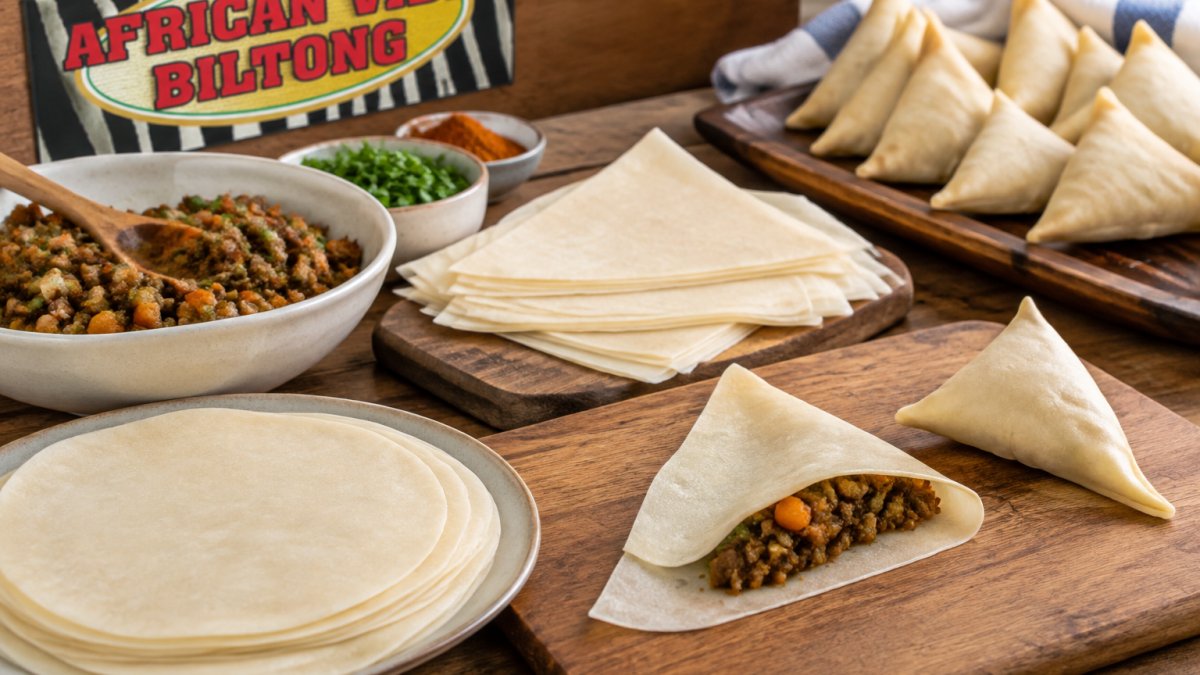
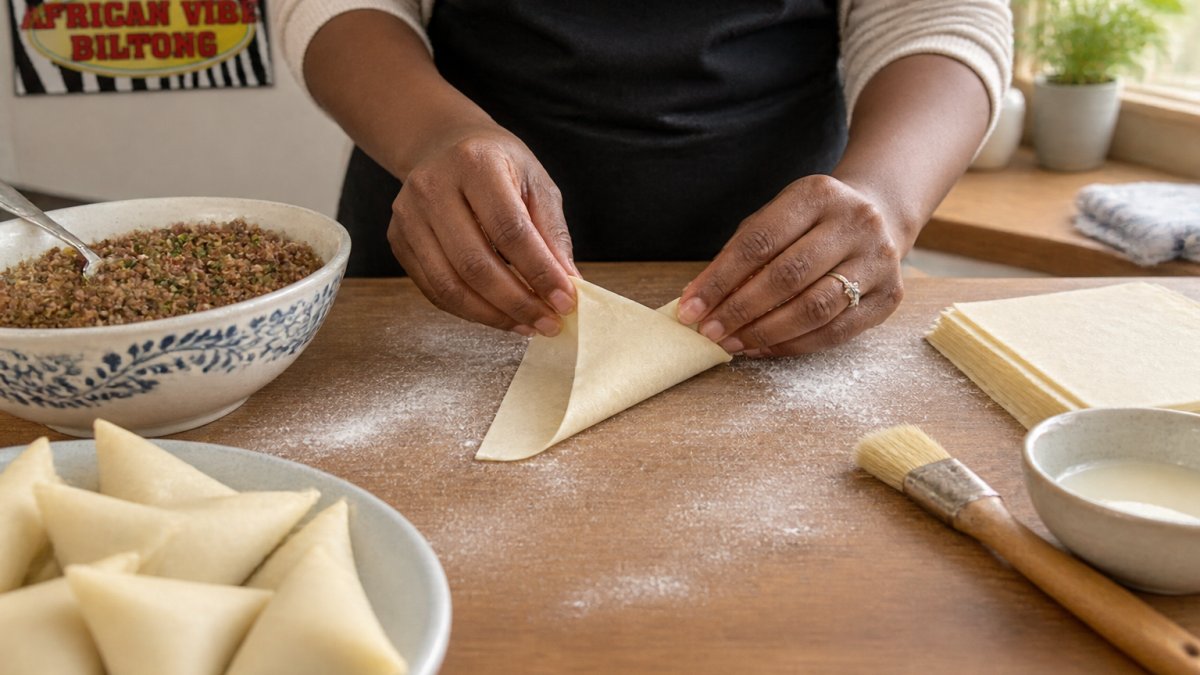
Learning how to fold samoosas takes one or two tries, then it becomes muscle memory. Work on a clean, dry bench with a small bowl of water or beaten egg white beside you, and keep the stack of pastry sheets under a damp tea towel so the edges do not crack before you reach them.
- Lay a pastry strip on the bench at an angle to you, roughly 30 cm long and 8 cm wide.
- Place a heaped teaspoon of filling at the bottom-left end, leaving a 1 cm border on every side.
- Fold the bottom-left corner diagonally over the filling to meet the right-hand edge, making a triangle.
- Lift the triangle and fold it straight up along the strip, keeping the seam on the same side each time.
- Repeat the diagonal-then-up fold until you reach the top of the strip, then trim any excess and seal the open edge.
Keep the filling modest. A heaped teaspoon is right for a strip this size; overfilled triangles burst in the oil, and you lose the whole batch to leaks.
Troubleshooting the Fold
Most folding problems fall into four patterns, and each has a fix.
- The triangle will not sit flat. This usually means the first diagonal fold was too shallow. Unfold, re-lay the strip, and make the first fold a true 45-degree triangle rather than a narrow wedge.
- The strip runs out before the filling is enclosed. You are taking folds that are too wide. Each fold should advance the triangle by roughly the width of the strip, not more. If you are short, trim the strip shorter next time rather than stretching the pastry.
- The pastry tears at the corner. Dry pastry is the cause. Keep the sheets covered, and if a corner splits, patch it with a small offcut pressed on with a dab of water before sealing.
- The finished triangle is loose and baggy. The filling was too wet or too much air was trapped. Press the triangle gently as you fold to push air out, and make sure the mince filling has cooled and drained before it goes anywhere near the pastry.
Sealing the Edges So Nothing Leaks
Sealing is where neat samoosas are won or lost. Dip a finger or pastry brush in water or egg white and run it along the open edge before you press it closed.
Press firmly, then check every corner. Watch out: a pinched corner with a pinhole will spit oil and split during frying.
If you are folding a large batch, work in rows on a lined tray and cover the finished triangles with a clean tea towel so they do not dry out while you finish the rest.
Frying for a Crisp, Golden Shell
Oil temperature is the single variable that decides whether a samoosa comes out crisp or greasy, and most home cooks guess at it. A kitchen thermometer takes the guesswork out: aim for 175°C to 180°C.
Use a neutral oil with a high smoke point, such as sunflower or canola, and fill the pan no more than a third deep.
Fry in small batches, three or four at a time, turning once.
Test one first. A single test triangle tells you whether your oil is right before you commit the whole tray. If it browns in seconds, the oil is too hot.
Troubleshooting Greasy, Burst or Pale Samoosas
- Greasy pastry. The oil was too cool, or the batch was too large and the temperature crashed. Fry fewer at a time and let the oil recover between batches. Wet filling also steams and softens the shell from inside, so drain the mince well before folding.
- Burst seams. Overfilling or a pinhole in the seal. Check every seam before frying, and never fry a triangle with a visible gap, patch it with a dab of water and a pastry offcut.
- Pale after several minutes. The oil is under temperature. Raise it gradually and test again rather than simply frying longer, which dries the filling out.
- Uneven colour. Crowding the pan stops the triangles from moving freely. Give them room and turn once, gently, with a slotted spoon.
If you enjoy curried mince wrapped in pastry, our vetkoek with curried mince recipe is the next one to try.
Baked Samoosas and Air-Fryer Options
Not everyone wants a pot of hot oil on the stove, and baked samoosas are a genuinely good alternative.
An air fryer works well too. Brush with a little ghee, arrange in a single layer without crowding, and cook until golden, shaking the basket once. They come out crisp with far less oil.
The trade-off is texture. Baked and air-fried samoosas are crisper and drier than fried ones, closer to a pastry shell than a proper fry. For a party tray, we still fry. For a weeknight batch, the air fryer earns its place.
Make-Ahead Storage, Reheating and Food Safety
Samoosas are excellent make-ahead food, and that is half their charm. Fold a big batch and freeze the raw triangles on a tray, then bag them once firm.
Cooked samoosas keep in the fridge for two to three days in a sealed container. Reheat in a hot oven or air fryer to bring back the crunch. The microwave softens the pastry, so avoid it if you can.
Food safety matters with mince. Cool the filling quickly, never leave it sitting out for hours, and refrigerate promptly. Reheat leftovers until piping hot all the way through (Food safety).
Serving Samoosas With Chutneys and Dipping Sauces
A samoosa needs a dip, and South African tables offer a few favourites. Chutney is a classic pairing, sweet and tangy against the spiced mince. You can pick up Mrs Balls peach chutney or the hot chutney to have both on the table.
Beyond chutney, try these:
- A quick yoghurt and mint raita to cool the spice
- A tamarind dipping sauce for a sharp, sour note
- A simple tomato and chili relish for a Durban curry feel
Serve the samoosas hot with the dips alongside, and let people help themselves. That is how they disappear fastest.
Samoosas reward a little patience: cool the filling, seal every seam, and keep your oil steady. At African Vibe, we stock the Cape Malay spices, chutneys and pantry staples that make a proper batch, all chosen for authentic flavour.
Frequently Asked Questions
What is the difference between a samoosa and a samosa?
They are the same snack with two spellings. Samoosa is the common South African and Cape Malay form, while samosa is the Indian spelling used in most recipe books and restaurant menus. The Cape Malay version usually leans on warm spices such as cumin, coriander and turmeric with a touch of chilli, and the pastry is often a thin spring-roll sheet folded into a triangle. The filling is typically minced beef with potato, onion, garlic and ginger, finished with fresh coriander.
How do you stop samoosas from opening while frying?
Seal the last flap with a paste of flour and water or a little beaten egg white, pressing firmly along the whole edge. Keep the filling cool and fairly dry so steam does not push the seam apart, and never overfill the triangle. Fry in oil at a steady medium heat rather than a furious boil, and turn gently with a slotted spoon. If a seam still lifts, pull the samoosa out, reseal it and return it to the pan once the oil has recovered.
Can you bake samoosas instead of frying them?
Yes. Baked samoosas work well and stay crisp if you brush each one lightly with melted ghee, butter or oil before they go into a hot oven. Arrange them on a lined tray with a little space between each triangle so the pastry crisps rather than steams. Turn them once halfway through so both sides brown evenly. They come out drier and lighter than fried versions, which suits anyone watching oil intake, and they reheat well the next day.
What spices are used in mince samoosas?
A classic Cape Malay mince samoosa recipe uses cumin, coriander, turmeric, chilli powder, garam masala and a little cinnamon or clove for warmth. Fresh garlic and ginger go in with the onion at the start. If you want to skip measuring individual spices, a ready-made cook-in sauce or a specialist spice pack does the blending for you. Taste the filling before it cools completely, since the seasoning fades slightly once the mixture is cold.