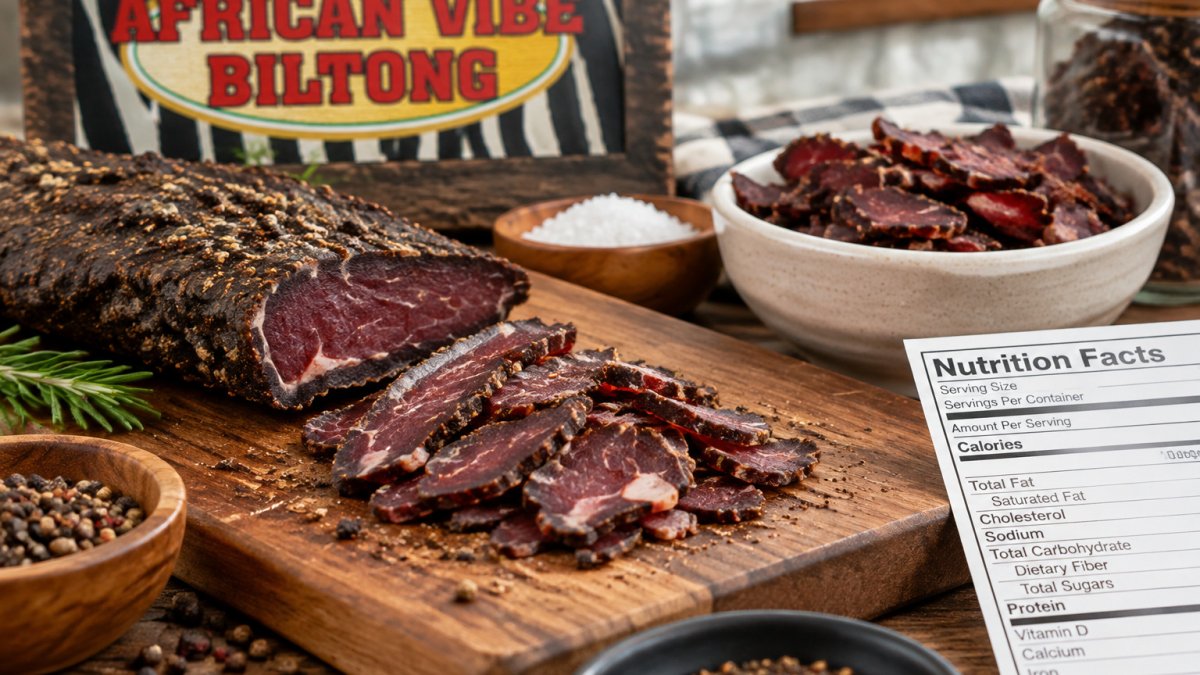
 Ultimate guide
MSG Free Biltong Nutrition Facts: A Complete Label Guide
Last Updated: November 12, 2026
Quick Summary
MSG free biltong nutrition facts are the per-serving and per-100-gram figures for energy, protein, fat, carbohydrate and sodium in air-dried, cured beef, plus additive claims like no added MSG. Compare biltong nutrition on the per-100-gram column, since per-serving figures depend on the manufacturer's chosen serving size. Verify any MSG claim in the ingredient list, not the front of the pack.
- Per-serving figures depend on the manufacturer's chosen serving size, so convert to per 100 g before comparing.
- Protein density per 100 g rises as moisture is lost during drying, because the water has gone while the protein remains.
- Traditional biltong carbohydrates usually sit in the low single digits per 100 g, with sugars close to zero.
- Salt is a functional curing ingredient, so compare the per-100-gram sodium line between products first.
- Check the ingredient list for monosodium glutamate, MSG, 621 and other glutamates such as 620 and 622 to 625.
Table of Contents
- What MSG Free Biltong Nutrition Facts Actually Tell You
- The Core Numbers: Protein, Fat, Carbohydrates and Sodium
- Biltong vs Beef Jerky Nutrition: What the Labels Reveal
- Is Biltong Keto Friendly? Carbohydrates, Sugar and Fat Explained
- How to Read Biltong Labels to Confirm It Is MSG Free
- Why Nutrition Varies by Cut, Recipe and Drying Level
- Allergens, Additives and Cross-Contact: What to Check Before You Buy
- Ordering Biltong That Matches Your Nutrition Goals
- Frequently Asked Questions
What MSG Free Biltong Nutrition Facts Actually Tell You
MSG free biltong nutrition facts are the per-serving and per-100-gram figures describing the energy, protein, fat, carbohydrate and sodium content of air-dried, cured beef, alongside additive claims such as "no added MSG". The label tells you less than you think until you know how to read it.
A nutrition information panel is a legal document, not a health score. It reports what a laboratory found in a sample of that batch, formatted to a standard, not whether the product is good for you.
What it does do is let you compare products on equal footing, provided you compare the same column. Below, we walk through the per-serving versus per-100-gram trap and the additive claims that sit outside the nutrition panel entirely.
Per Serving vs Per 100 g: Why the Numbers Look Different
The per-100-gram column is the only fair basis for comparison. Per-serving figures depend entirely on what the manufacturer decides a serving is, and that decision is theirs to make within the rules.
A packet declaring a 25-gram serving will show dramatically smaller numbers than one declaring a 50-gram serving, even if the two products are nutritionally identical. Neither is lying; they have simply drawn the line differently.
When comparing two packets of biltong, ignore the per-serving column until you have checked the serving size in grams. If one says 30 g and another 50 g, convert both to per 100 g before drawing any conclusion. This single habit prevents most of the confusion people bring to us.
The per-100-gram column also travels better. Because biltong loses water weight during drying, two pieces of the same size can weigh very different amounts; per-100-gram figures normalise for that, making them the sensible basis for any side-by-side comparison.
The Core Numbers: Protein, Fat, Carbohydrates and Sodium
Protein is the headline figure for most biltong buyers, and it should be.
Fat varies most between products. Lean cuts such as silverside and topside produce distinctly leaner biltong, often in the single digits of fat per 100 g, while fattier cuts push the figure meaningfully higher.
Carbohydrates sit low in traditional biltong, usually in the low single digits per 100 g, because the recipe is meat, spice and salt rather than sugar or filler.
Sodium is where biltong earns its reputation. Salt is a functional ingredient in curing and drying, not a flavouring afterthought: it draws moisture out, suppresses spoilage organisms and helps the product keep without refrigeration.
For a deeper breakdown of what those protein numbers mean in practice, our guide to protein in biltong per 100g walks through the figures in more detail.
Micronutrients Worth Knowing: Iron, Zinc and Vitamin B12
Biltong carries the micronutrient profile of beef, concentrated. Iron, zinc and vitamin B12 all appear in meaningful amounts because the product is dried muscle tissue, not a reconstructed snack.
Beef naturally contains micronutrients such as iron, zinc and vitamin B12, which are carried into dried meat.
Not every panel declares these. Where micronutrients are listed, they are usually expressed as a percentage of the daily intake reference value. Where micronutrients are listed, they are usually expressed as a percentage of the daily intake reference value, which is calculated against a reference person rather than an individual.
Biltong vs Beef Jerky Nutrition: What the Labels Reveal
The clearest difference between biltong and beef jerky on a nutrition panel is sugar. Jerky recipes commonly include sugar or a sweetened marinade, and that shows up in the carbohydrate and sugar lines. Traditional biltong generally does not.
Sodium tells a more nuanced story. Both products are salt-cured, so both run high, and you cannot assume one is automatically lower without reading the panel. Jerky is often smoked or heat-dried with a liquid marinade; biltong is air-dried with a vinegar and spice rub. Those methods produce different moisture levels, which shift every per-100-gram figure.
| Feature | Traditional Biltong | Beef Jerky |
|---|---|---|
| Drying method | Air-dried | Heat-dried or smoked |
| Typical added sugar | Usually none | Often present in marinade |
| Carbohydrate level | Low | Variable, often higher |
| Sodium | High, salt-cured | High, salt-cured |
| Texture | Soft to firm, sliced thick | Chewy, sliced thin |
If you want the fuller side-by-side, our comparison of beef jerky and biltong covers taste, texture and preparation differences in depth.
Is Biltong Keto Friendly? Carbohydrates, Sugar and Fat Explained
Biltong is generally keto friendly, because traditional recipes keep carbohydrates low and deliver fat and protein instead. The caveat is the word "traditional": a sweetened or heavily sauced biltong is a different product nutritionally.
Check three lines on the panel before you commit. First, total carbohydrate per 100 g. Second, sugars, which should be negligible in a traditional recipe. Third, ingredients, where any syrup, dextrose or maltodextrin will appear by name.
Fat content matters less for ketosis than carbohydrate does, but it matters for satiety. Leaner biltong suits someone counting calories; a fattier cut suits someone chasing fat as fuel. Neither is wrong; they serve different goals.
Our guide on how to tell if biltong fits your keto diet takes you through the macro maths step by step if you want to work it out against your own targets.
How to Read Biltong Labels to Confirm It Is MSG Free
"MSG free" is a claim, and claims have definitions. Monosodium glutamate is a flavour enhancer, and in Australia it must be declared in the ingredient list when added, under its name or its additive number, 621 (MSG in food).
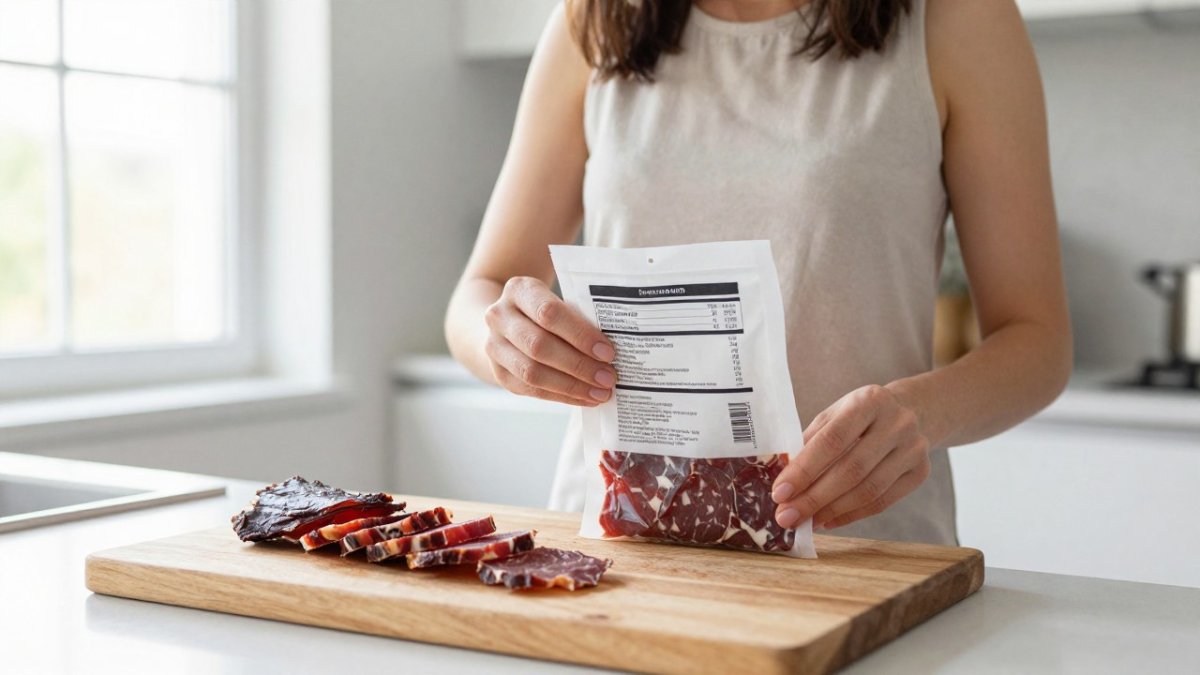
The distinction matters because glutamate is not only an additive. It is an amino acid present naturally in beef, in aged or fermented foods, and in ingredients such as yeast extract and hydrolysed vegetable protein.
Here is how to verify a claim in practice, in the order that saves the most time:
- Check the ingredient list for "monosodium glutamate", "MSG" or "621"
- Check for other glutamates: 620, 622, 623, 624, 625
- Check for yeast extract and hydrolysed vegetable protein, which carry glutamate
- Confirm the claim wording: "no added MSG" is not the same as "MSG free"
- Check the allergen declaration for gluten, dairy and sulphites
- Check the best-before date and storage instructions
Watch out: a packet can carry a "no added MSG" claim while listing yeast extract in the ingredients, which delivers glutamate without technically being added MSG.
A second trap is the seasoning blend.
The most reliable verification is a direct question to the producer: is MSG added at any point, and do any ingredients in the seasoning blend contain glutamate? A maker who can answer that clearly is giving you more than a front-of-pack claim ever can.
Why Nutrition Varies by Cut, Recipe and Drying Level
Two biltong makers can start with the same breed of cattle and produce panels that differ meaningfully. Cut is the first variable: silverside, topside and rump carry different fat-to-lean ratios, and the panel follows the cut.
Recipe is the second. The ratio of salt to spice, the amount of vinegar in the rub, and whether any sugar enters the mix all move the numbers. A traditional South African spice blend of coriander, pepper and salt behaves differently on a panel from a recipe built around a wet marinade.
Drying level is the third and most underrated. The longer a piece dries, the more water it loses, and the more concentrated every remaining nutrient becomes per 100 g.
This is why comparing biltong across brands using per-serving figures alone is unreliable, and why we always point people back to the per-100-gram column.
Allergens, Additives and Cross-Contact: What to Check Before You Buy
Check the allergen declaration on the specific product before relying on it for gluten or dairy restrictions, as reformulation or shared equipment can change this.
The allergen declaration is the authoritative source, not the marketing copy. In Australia, common allergens must be declared, so check that section rather than inferring from the ingredients (Food allergies). Sulphites are worth watching in dried meat products, as are any sauces or flavourings added late in production.
Cross-contact is the harder question. A producer making multiple products in one facility may handle gluten, dairy or nuts on shared equipment. If your restriction is medical rather than preferential, ask the producer directly about their separation practices rather than relying on a "may contain" line alone.
Nitrite-free and preservative-free claims are useful signals, but only verifiable through the ingredient list and a direct question to the maker.
Ordering Biltong That Matches Your Nutrition Goals
The practical upshot is this: decide which two or three numbers actually matter for you, then compare every product on the per-100-gram column against those numbers. For most people that means protein, sodium and carbohydrate, in that order.
At African Vibe, we make our biltong from 100% naturally grass-fed Black Angus wagyu beef, free from added antibiotics and hormone growth promotants, using traditional South African preparation methods. If MSG-free snacking is your priority, our guide to buying MSG-free biltong online covers what to look for in quality and freshness, and our Biltong Traditional Lean is the cut we would point a lean-protein shopper toward first.
Ordering online carries its own questions, and freshness matters more with dried meat than most snacks, so ask how orders are packed before you commit.
The gap between a good biltong purchase and a disappointing one usually comes down to preparation, not luck. Know your three numbers, read the ingredient list rather than the front of the pack, and ask the maker directly about anything the label leaves ambiguous.
Frequently Asked Questions
Does traditional biltong contain MSG?
Traditional biltong is made from beef, vinegar, salt and spices such as coriander and pepper, so it does not need MSG or flavour enhancers. However, some commercial products add MSG or hydrolysed vegetable protein to boost savoury flavour. To confirm, check the ingredients list for monosodium glutamate (additive code 621) and look for a no added MSG statement. Biltong nutrition panels will not list MSG as a nutrient, so the ingredients list is the only reliable place to verify it.
Is biltong a good source of protein for keto diets?
Biltong is a good fit for keto because it is high in protein and low in carbohydrates, with most of its energy coming from protein and fat. Protein is the main macronutrient in biltong, and traditional recipes avoid the sugar found in many jerky-style snacks. Check the carbohydrate and sugar figures per 100 g on the label, since some recipes include sugar or sweet spices. Plain, dry-cured biltong with no added sugar is the safest choice for staying in ketosis.
How can I identify MSG on a biltong nutrition label?
Look at the ingredients list rather than the nutrition information panel. MSG appears as monosodium glutamate or additive number 621, and related flavour enhancers include 627 and 631. Also watch for vague terms like flavour enhancer, hydrolysed vegetable protein or yeast extract, which can deliver similar savoury notes. A clear no added MSG claim plus a short ingredient list of beef, vinegar, salt and spices is the simplest way to verify a product.
How does biltong nutrition compare to beef jerky?
Biltong and beef jerky differ mainly in how they are made. Biltong is air-dried with vinegar and spices and usually contains less sugar, while jerky is often smoked or cooked with sweetened marinades. That means jerky can carry more carbohydrates and sodium per 100 g. Protein levels are similar, but biltong generally has fewer added ingredients. Always compare the per 100 g columns rather than serving sizes, because pack serving sizes vary between products.