 How-to
8 Steps to Cook Wagyu Steak Perfectly at Home
Last Updated: November 8, 2026
Quick Summary
To cook wagyu steak at home, use high heat and a short cook time with little or no added oil, since the heavy marbling makes its own cooking fat. Sear a dry, room-temperature steak about 1.5 to 2 minutes per side in a hot cast-iron pan, salt it before cooking and add pepper after.
- Let the steak sit at room temperature for 20 to 30 minutes and pat it bone dry before searing.
- Sear 1.5 to 2 minutes per side without moving it, then flip once.
- Pull the steak from the heat 3 to 5°C below your target for carryover cooking.
- For steaks 4 cm and thicker, use reverse sear or sous vide instead of pure pan-searing.
- Tilt the pan and spoon out excess rendered fat so the steak sears instead of steaming.
Table of Contents
- Why Wagyu Needs a Different Approach to Cooking
- How to Pan Fry Wagyu Steak for a Deep Golden Crust
- How to Grill Wagyu Steak Over Charcoal or Gas
- Wagyu Steak Cooking Temperature: Targets and Thermometer Technique
- How Long to Cook Wagyu Steak by Cut and Thickness
- Troubleshooting Common Wagyu Mistakes and Managing Rendered Fat
- Ordering Wagyu for Your Next Cook at Home
- Frequently Asked Questions
Why Wagyu Needs a Different Approach to Cooking
Wagyu is a heavily marbled cut, and that marbling changes everything.
The biggest mistake home cooks make is treating wagyu like an ordinary supermarket steak.
Marbling is the fine web of intramuscular fat. On wagyu, it melts at a low temperature and bastes the steak from the inside as it cooks.
- High heat, short cook. Wagyu needs a fast sear, not a slow roast.
- Little or no oil. The steak makes its own cooking fat.
- Salt late, pepper later. Pepper burns before the crust forms.
Get these five habits right and the rest follows: pan-searing, grilling, internal temperatures, and cooking times by cut and thickness.
How to Pan Fry Wagyu Steak for a Deep Golden Crust
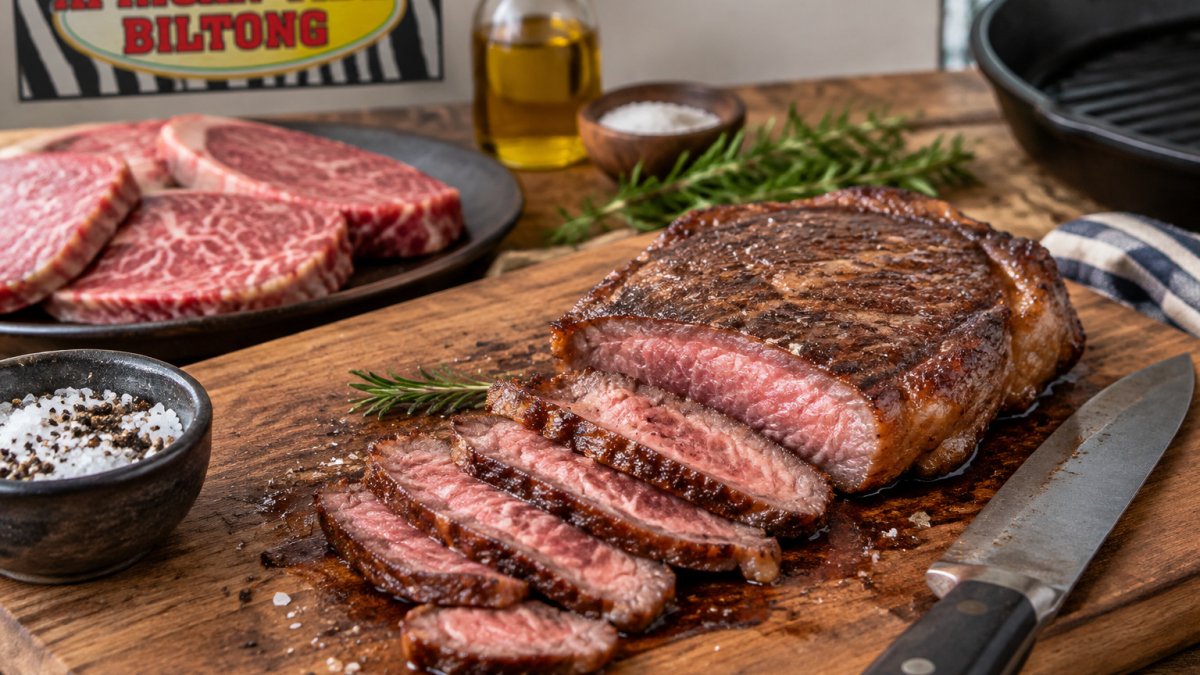
Pan-searing gives the deepest crust and suits most home cooks: a screaming-hot pan, a dry steak, about two minutes per side.
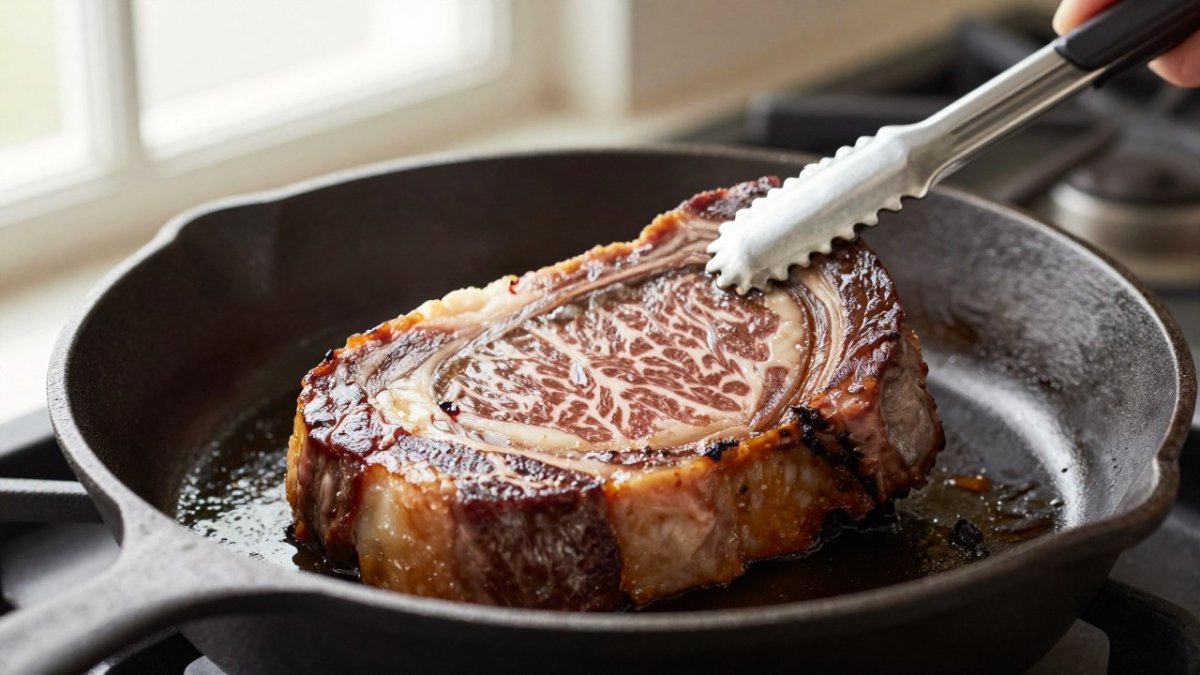
- Take the steak out early. Let it sit at room temperature for 20 to 30 minutes.
- Pat it bone dry. Moisture is the enemy of crust.
- Season with salt only. Hold the pepper until after cooking.
- Heat a cast-iron skillet over high heat until it just starts to shimmer. No oil needed.
- Lay the steak down away from you. Press it flat with tongs for five seconds so the whole surface makes contact.
- Sear for 1.5 to 2 minutes. Do not move it.
- Flip once and sear the other side for the same time.
- Stand it on its fat edge for 30 seconds to render the rim.
Watch out: if the pan starts smoking heavily and the fat pools, tilt the pan and spoon out the excess.
A common mistake is adding butter at the start.
For a deeper look at why this cut costs what it does, and why that careful approach pays off, read our guide on why Wagyu beef is expensive.
How to Grill Wagyu Steak Over Charcoal or Gas
Grilling works beautifully for wagyu, but only over fierce, direct heat: a fast char outside, a rosy centre, and no flare-ups from dripping fat.
Set up two-zone cooking: one side blazing hot, one with no heat.
For charcoal, build a full chimney of coals and spread them in a single dense layer. For gas, preheat on high with the lid down for at least 10 minutes.
- Oil the grates, not the steak. A light brush of oil stops sticking.
- Grill for 1.5 to 2 minutes per side for a thin cut, 2 to 3 minutes for a thick one.
- Turn with tongs, never a fork. Piercing lets the juices escape.
If you enjoy cooking over fire, our technique guide on how to cook boerewors evenly on a barbecue covers the same even-heat principles, and our roundup of South African braai foods for a family gathering will help you build a full spread around the steak.
Wagyu Steak Cooking Temperature: Targets and Thermometer Technique
The most reliable way to cook wagyu steak perfectly is a thermometer. Colour and touch are unreliable; an instant-read thermometer tells you the truth.
Here are the internal temperature targets we recommend:
Doneness | Internal Temperature | Notes |
|---|---|---|
Rare | 49-52°C | Cool red centre |
Medium-rare | 54-57°C | Best for heavily marbled cuts |
Medium | 60-63°C | Fat fully rendered, less juicy |
Medium-well | 65-68°C | Not recommended for wagyu |
Well done | 71°C+ | Wastes the marbling |
Pull the steak from the heat 3 to 5°C below your target. Carryover cooking will push it up as it rests.
- Insert from the side, into the thickest part, avoiding bone and fat pockets.
- Take two readings in different spots and use the lower one.
- Wipe the probe between readings.
For food safety, the Food Standards Australia New Zealand guidance on meat handling sets out safe storage and preparation practice.
Recommended internal temperature targets by doneness
How Long to Cook Wagyu Steak by Cut and Thickness
Cooking time depends on thickness first, then cut, then grade. This framework lets you adapt any steak in front of you.
Start with thickness, not the cut name
Thickness decides how heat travels. A thin steak is all crust and no gradient. A thick steak is all gradient and no crust unless you manage it. Use this as your starting point:
Thickness | Pan Sear (per side) | Grill (per side) | Best Method |
|---|---|---|---|
1.5 cm (thin) | 1 to 1.5 min | 1 to 1.5 min | Hot pan, fast sear |
2.5 cm (standard) | 2 min | 2 to 2.5 min | Pan or grill |
3.5 cm (thick) | 2.5 min, then rest | 3 min, then cool zone | Sear then finish gently |
4 cm+ (very thick) | Sear, then oven | Sear, then indirect | Reverse sear or sous vide |
These times assume a steak straight from the fridge, patted dry, in a properly preheated pan or grill. If your steak has been out at room temperature for 20 to 30 minutes, shave 15 to 20 seconds off each side for thin cuts.
Then adjust for cut
- Ribeye. Heavy intramuscular marbling plus a fat cap. The marbling insulates the centre slightly, so ribeye tolerates a hard sear better than leaner cuts. Sear it hard, then stand it on the fat cap for 30 seconds to render the rim.
- Striploin. A firmer muscle with a fat cap on one side and less internal marbling than ribeye. It benefits from a slightly lower pan heat so the exterior does not brown before the centre is ready. Sear, then rest on the fat cap.
- Tenderloin. The leanest of the three. With little internal fat to baste it, tenderloin dries out fast. Use a lower heat and a shorter sear, and consider a butter baste in the final 30 seconds.
Then adjust for grade and origin
This is where most home cooks go wrong. Not all wagyu behaves the same way.
- Heavily marbled Japanese-style wagyu (A4 to A5 equivalent). The fat renders at a low temperature and floods the pan quickly. Use a slightly lower pan heat than you would for lean beef, sear briefly, and drain the pan as you go. A5 in particular can be served closer to medium-rare to medium because the fat needs to render for the texture to be pleasant.
- Australian wagyu. Marbling scores run on a different scale, and grass-fed wagyu in particular carries less internal fat than grain-fed Japanese-style beef. Grass-fed wagyu tolerates a hotter, faster sear and benefits from a touch more added fat in the pan than a heavily marbled steak would.
- Crossbred wagyu. Marbling sits between commodity beef and fullblood wagyu. Treat it like a well-marbled ordinary steak: hot pan, little oil, short cook.
Cooks who ruin wagyu have usually used an A5 technique on a leaner Australian grass-fed steak, or a commodity-beef technique on a heavily marbled one. Match the method to the marbling, not the label.
When to switch to reverse sear or sous vide
For steaks 4 cm and thicker, pure pan-searing gives you a burnt ring and a raw centre. Two methods fix this:
- Reverse sear. Cook the steak in a low oven (around 90 to 110°C) on a wire rack until the centre is 5 to 8°C below your target, then sear hard in a hot pan for 30 to 45 seconds per side. You get edge-to-edge doneness and a proper crust.
- Sous vide. Cook in a water bath at your target temperature, then sear hard for 30 to 45 seconds per side. The most forgiving option for thick, expensive cuts.
Watch out: if you reverse sear or sous vide a thin cut, you will overcook it before the crust forms. Reserve these methods for steaks 3.5 cm and thicker.
A quick decision path
- Measure the thickness. That sets your base time.
- Identify the cut. That tells you whether to sear hard or ease off the heat.
- Check the marbling level. Heavy marbling means lower heat and more draining; lean marbling means hotter and faster.
- If the steak is 4 cm or thicker, choose reverse sear or sous vide before you turn on the pan.
For a deeper look at why this cut costs what it does, and why that careful approach pays off, read our guide on why Wagyu beef is expensive.
Troubleshooting Common Wagyu Mistakes and Managing Rendered Fat
Even careful cooks hit problems with wagyu. The difference between a good result and a ruined steak is usually heat management. Here is what goes wrong, why, and how to fix it.
The steak is greasy, not crisp
Why it happens: The pan was too cool. Wagyu fat renders at a low temperature, so a moderate pan melts the fat before the surface browns, and the steak ends up poached in its own fat.
The fix: Get the pan hotter before the steak goes in. A cast-iron pan should be preheated over high heat for 3 to 5 minutes.
The crust is bitter and black
Why it happens: Burnt fat or burnt pepper. Pepper burns at a lower temperature than beef browns, so pepper added at the start turns acrid before the crust forms.
The fix: Season with salt only before cooking. Add pepper after the steak comes off the heat. If you want butter, add it in the final 30 seconds and baste rather than fry.
The pan smokes excessively
Why it happens: Wagyu fat has a relatively low smoke point, and a hot pan plus a heavily marbled steak produces a lot of smoke fast. That is normal; it becomes a problem when the smoke turns acrid and coats the crust.
The fix: Use a high-smoke-point oil if you oil the pan at all, and ventilate before you start. Once the pan is clear of bitter smoke, a glass of red wine can complement the steak without competing with its rich flavor, and WINESLUT offers a natural next stop for pairing ideas.
The steak sticks to the pan
Why it happens: Either the pan was not hot enough, or the steak was moved before the crust released. A properly seared steak releases itself from the pan once the crust has formed.
The fix: Wait. Do not prod or move the steak for the first 1.5 to 2 minutes. If it still sticks after that, the pan was underheated.
The fat renders too quickly and floods the pan
Why it happens: Heavily marbled wagyu releases a lot of fat in the first minute. On a flat pan, that fat has nowhere to go.
The fix: Tilt the pan and spoon the fat into a heatproof jar as it pools, once or twice during the sear. Rendered wagyu fat is superb for roasting potatoes, frying eggs, or sautéing greens; strain it through a fine sieve if you want it clean.
The exterior browns before the centre is ready
Why it happens: The cut is too thick for pure pan-searing, or the heat is too high for the thickness. The outside hits your target crust while the centre is still raw.
The fix: Sear it, then finish in a moderate oven (around 160 to 180°C) or move it to the cool side of the grill.
Flare-ups on the grill
Why it happens: Rendered wagyu fat drips onto coals or burners and ignites. Wagyu produces more drips than lean beef, so flare-ups are more likely.
The fix: Set up two zones: one blazing hot for the sear, one with no heat. Sear over the hot side, then move the steak to the cool side if a flare-up starts. Keep the lid open to watch for flames, and never spray water on a fat fire; move the steak instead.
It tastes flat
Why it happens: Under-salting, or slicing before resting. Salt needs time to penetrate, and resting lets the juices redistribute.
The fix: Salt generously before cooking, rest for at least five minutes (longer for thick cuts), and slice across the grain, perpendicular to the muscle fibres, so every bite is more tender.
A note on portions
Wagyu is rich, so a modest portion per person is usually plenty, served with something fresh and sharp. For a group, cook fewer, thicker steaks and slice them to share rather than cooking many thin ones.
For food safety, the Food Standards Australia New Zealand guidance on meat handling sets out safe storage and preparation practice.
Ordering Wagyu for Your Next Cook at Home
Great cooking starts with great meat, and that is where we come in.
Our buyer's guide on the best grass-fed Wagyu beef in Sydney walks through what to look for, cut by cut. And if you want to round out the meal, you can browse our online store for authentic South African products, from biltong to rooibos, wines and beer, delivered to your door.
Cook it hot. Cook it fast. Rest it well. Then enjoy a steak that does the hard work for you.
Ready to put these steps into practice? African Vibe makes it easy to cook restaurant-quality wagyu at home, with grass-fed Black Angus wagyu beef, traditional South African preparation methods, and a curated range of pantry favourites delivered across Sydney.
Frequently Asked Questions
Should you cook wagyu steak in a pan or on the barbecue?
Both work, but they suit different cuts. A cast-iron skillet gives you full contact with the surface, so a thick ribeye develops an even crust and the rendered fat stays in the pan for basting. A grill adds smoke and char. Whichever you pick, preheat it properly and keep the heat medium-high rather than scorching, because wagyu's high fat content can burn before the centre is done.
Do you need oil to cook wagyu steak?
Usually no. Wagyu carries so much intramuscular fat that it renders its own cooking oil within the first minute or two. A thin film of a high-smoke-point oil in a cold pan helps the crust start evenly, but adding a generous glug is a common mistake that leaves the steak greasy. If you are grilling, lightly oil the steak or the grill grates rather than pouring oil over the coals.
What internal temperature should wagyu steak be cooked to?
Pull the steak off the heat before it reaches your target, letting carryover cooking finish the job. Too much heat dries out the muscle fibres. Use a digital probe thermometer inserted into the thickest part, away from bone and fat, and check from around the two-minute mark on thin cuts.
How long should wagyu steak rest after cooking?
Rest a thick cut for five to eight minutes and a thin cut for three to four minutes, loosely covered with foil. Resting lets the juices redistribute so they stay in the meat when you slice it, rather than running onto the board. Slice across the grain just before serving, and if you have rendered fat left in the pan, spoon a little over the sliced steak for extra flavour.